Blog

  • The VAPOR planning framework for getting things done

    The VAPOR planning framework for getting things done

    • How are your New Year’s resolutions turning out?
    • How close are you actually getting to your goals?
    • How good at you at saying ‘no’ to the things that don’t matter?

    Struggling? There’s got to be a better way.

    In part it’s because we don’t often spend time working out what it is that we do want to get done. Or why those things matter to us. So what happens is, we end up saying ‘yes’ to everything because we don’t know what’s important.

    My tried and tested VAPOR framework changes all of that. It puts you back in control of your goals, provides a clear way to get after them, live your life in alignment with what you believe is important, and allows you to say ‘no’ to extraneous nonsense. I use it every day to get closer to what I want to achieve and focus on the really important stuff that allows me to fill my day with the things that matter to me. In the last year, it’s allowed me to write and produce a play for the theatre (something I haven’t done since I was a student), lose more weight than I’ve done in the decade previous with yo-yo dieting, and complete a coaching and facilitation course alongside my substantive consulting job.


    VAPOR stands for:

    Values

    Activities

    Plans

    Organisation

    Reflection

    Each part of the framework has associated activities with them and should be followed in order.


    Values

    What are your values? A simple question with seismic implications. And often a question we don’t ponder. Or if we do, we land on nebulous things that aren’t quite right or don’t really resonate. I’m going to offer two ways to get to your values.

    Option 1: Ask a simpler question, but sit with it for a long time.

    Instead of ‘what are my values?’, ask ‘what do I value?’. A really subtle shift, but is simpler to sit with.

    Give yourself an hour and that question. Write down every response you can think of for about 30 minutes: I value laughter, I value fun, I value my family, I value subversiveness, I value betterness (it doesn’t matter if you make words up). Then read each one out loud and see what you notice. If it feels right, keep it; if there’s something not quite right, ditch it; if there’s duplication or themes, theme them.

    You should end up with about 4-6 core values.

    or

    Option 2: Revisit your life so far, looking for clues.

    This technique is about looking for pivotal moments in your life. Think back, or better still, find a friend who’ll listen to you for a bit and ask them to help you notice the moments.

    Go through the story of your life, from childhood, and notice moments of change – where you used to do things one way, and then you found another way; or where change happened to you and you had to learn something else. Behind these moments of change resonates values. The things that are inherently important to us provoke us to act differently in these moments, they force us to focus on what really matters to us. They could be when you decided to take up a particular hobby or pastime, when you stuck with something at a moment you could have given up, when you discovered you were a party animal, or when you got home and realised nothing would ever be the same.

    These moments of your story pull out the things that matter to you.

    As with option 1, sit with that list of things: ‘tenacity seems to be important to me; I seem to tbe the kind of person who values helping others’ and keep the ones that resonate, and park the ones that don’t any more. Maybe those ones served you really well at that moment of change, but might not be as important for you right now.

    Again, theme them so that you end up with 4-6 core values.

    Shortcut

    I’m going to suggest a few things that I value which you might too:

    • Craft – getting better at skills that matter to you – they could be work or personal.
    • Connection – connecting to yourself, your partner, family, friends, and society.
    • Health – your physical, mental and financial health.
    • Creativity – making something that wasn’t there before.

    Activities

    Identifying a regular activity you do around each of your values.

    I deliberately haven’t used the term ‘habit’ here, because I don’t enjoy the pressure that comes with that term. I can valuemy physical health, but it doesn’t mean I have to go for a run every day. However, if I do have a set of regular activities, like going to the gym, taking classes, going for a long walk or a jog, and staying under a certain number of calories for the week, then I can say I value my health.

    For each of your values, think about some things you can do to show to yourself that you take this value seriously.

    They should be easy enough to be able to fit into most days, but difficult enough that they require some effort. The effort is important in terms of the story we tell ourselves that ‘doing this means I take it seriously’.

    Some examples for my values:

    For my craft, I regularly listen to podcasts, read a book instead of picking up my phone, and use the VAPOR planning framework.

    For connection, I go to the pub on a Friday night with my wife and we chat about the week, and I donate regularly to charity.

    For health, I take part in exercise activities, write a journal, and take a weekend walk in nature.

    For creativity, I play the piano and do some automatic writing a couple of times per week.


    Plans

    Establishing what you plan to achieve according to your values.

    No that you have the foundations of living a life in alignment with your values, you can set to the task of planning out what you want to achieve in accordance with your values. This will give you a clear indication of what things you want to be better or different over various time horizons, and will also give you the ammunition to say ‘no’ when other things come up.

    I suggest planning at the quarterly, weekly, and daily scale. And sometimes annual if helpful for you. But mostly, we can make decent headway on the things we want to achieve in a quarter.

    For each value, plan to achieve one thing in the next quarter. Depending how many values you have identified, you may decide that in some quarters you don’t have any activities for that value – and that’s ok if it’s an intentional gap. For me, for example, if I’ve had a particularly creative couple of quarters, I might deliberately decide to take a break to allow myself to recharge. I still value creativity, and will still keep up the regular activities, but may choose not to have a specific plan on the go.

    So, for example, you may decide that for your craft, you plan to acquire a new qualification in the next quarter. Or for connection, you might plan to see friends or family that you haven’t caught up with for a while. For your financial health, you may plan to finally set up that budget you’ve been meaning to do forever. There’s no fancy format, just write down the thing you want to be better or different in the next three months against the value.

    If you want to get a bit more advanced or ambitious in your planning, you can set out levels of accomplishment – from commitment (you definitely want this), to challenge (it’ll be tough, but possible), to crushing-it (if everything works in your favour, perhaps this will happen).

    The joy of planning in this way, is you’ve always got a good answer if someone asks to add something to your plate. If the project is in alignment with your values and you haven’t got anything on this quarter, maybe you say ‘yes’. If it’s in alignment with your values but you’ve already got something on this quarter, you can say you’d love to do it, but you’re already planning to achieve X, Y, and Z this quarter – perhaps you could consider it when you do your next quarterly plan. If it’s not in alignment with your values and you already know what you want to achieve, it’s much easier to say ‘no’ because you already know what and why you are doing and how you intend to spend your time: ‘I’m already planning to achieve A, B, and C this quarter, so I’m not going to be able to plan in your project’.

    Having the regular planning rhythm and the intention to achieve things in alignment with your values makes conversations about adding more in so much more easy. It also helps keep you happier and more fulfilled, because you’re always working towards something that matters to you.


    Organisation

    The organisational steps to keep momentum with your plan.

    OK, so you now have your quarterly plan and you need to get organised to make it happen. The next step is to look at this quarterly plan every week. I suggest doing this on a Friday. Each Friday, look at the quarterly plan and write a plan for the week that will get you a step closer to each goal. Maybe this week you want to read a chapter of a particular study book, practice a new technique, run 1km further.

    Write down your weekly plan.

    Keep it realistic – there’s no need to overstretch yourself. If in doubt, cut the plan down to about 60% of what you first think you can do in a week. Better to achieve that than to be left feeling like you haven’t met your goals. If you have extra time you want to fill, at least now you’ve got a quarterly plan to go to and take action on that.

    Then, every morning, check your weekly plan and pick out the things you plan to do today. Sometimes this will be decided in advance for you (e.g. a class is always on Wednesday), sometimes you have autonomy to decide. The key is to be intentional about your plans and your time. If you don’t plan how you want to use your time, someone else sure will – whether that’s your boss, Slack chat, or TikTok’s algorithm.

    How do you write all these plans up?

    Personally, I use a Trello board. I have a column (and associated colour label) for values. Then a column for regular activities. The next column has the quarterly plans, a weekly plan backlog column, then a doing and done column for each day. Cards can be colour coded with the values, so I can see at a glance that I’m living a balanced life, and the quarterly plans have checklists to tick off various points along a journey, such as weight-loss markers, or number of words written for a book.


    Reflections

    At the end of each week and each quarter, take time to reflect on what you’ve achieved.

    It’s a moment of celebration and of learning. Perhaps you crushed some goals and missed targets on others. Maybe you let your regular activities slip or your plans got waylaid by a new project or social crisis.

    What matters is you take time to reflect, learn and take lessons into the next quarter. If you’re always overcommitting, only take one or two quarterly goals into the next quarter, and cut the weekly and daily plans to about 60%. If you find that you’re super creative on Friday mornings, then plan to do your creative work then.


    I hope the VAPOR planning framework is useful for you. It’s been fantastic to help me achieve more of the things I want to achieve, live a life in alignment with my values, and be able to say no to the things that don’t fit.

    I believe strongly in ‘betterness’ (my made-up word from earlier) and so, I use Dieter Rams’ famous quote to inspire this lifestyle: “Less, but better.”

    Less, but better

    Dieter Rams

    Good luck using it, and let me know how you get on.

  • Does your canopy of work make sense?

    Does your canopy of work make sense?

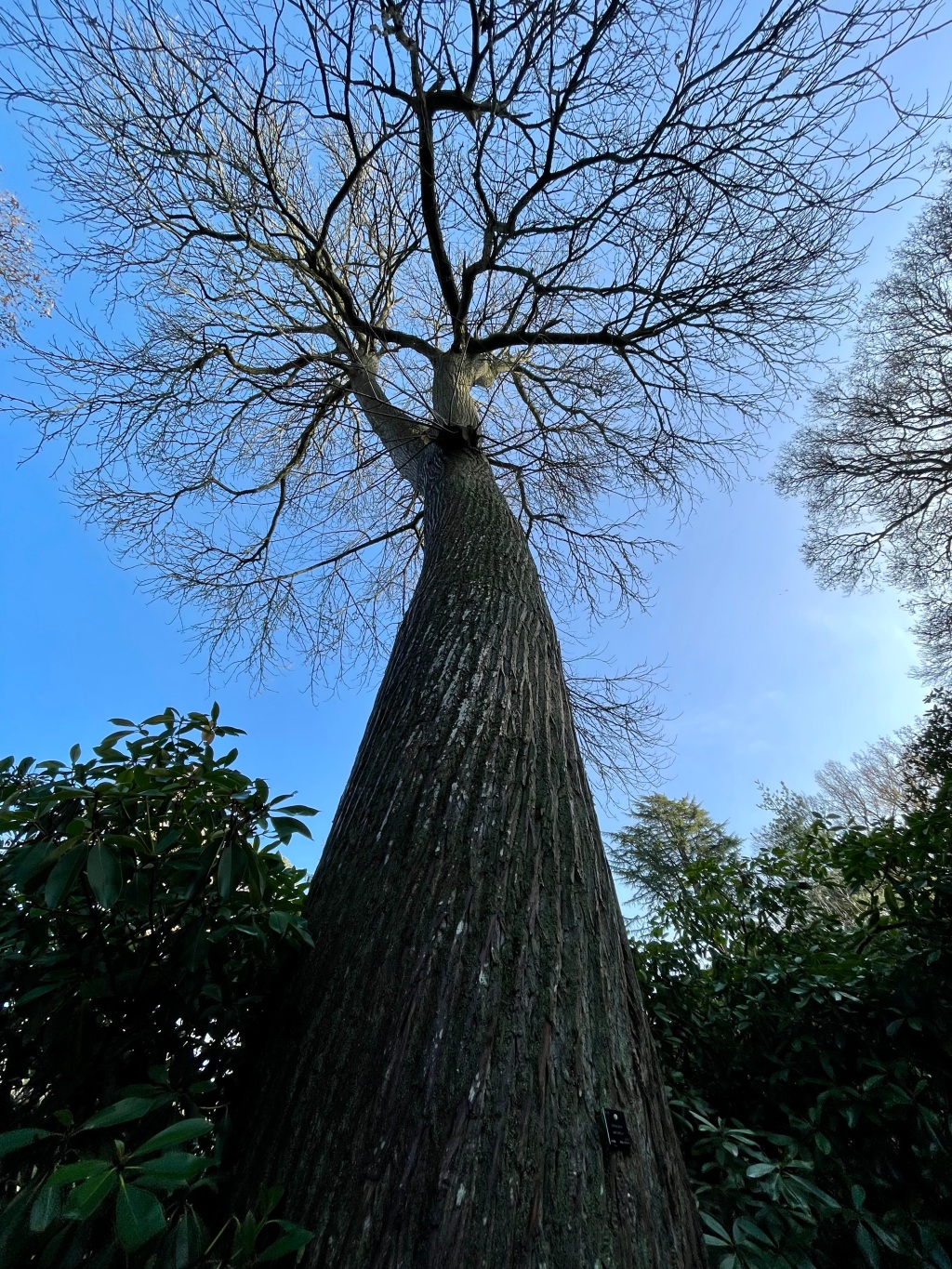
    Another trip to Westonbirt Arboretum, another incredibly valuable lesson in the development of the Outcomes Tree. I was so enthused, I took a picture. Check out this beautiful Acer tree:

    Look at the gorgeous canopy, the perfection of the Japanese Maple leaves – extraordinarily satisfying, yes? Such perfection in nature! Look down the branches – layers of growth and life. Then to the trunk…hang on…there’s two trunks! Two trees! Living in perfect harmony with each other. Check those leaves again – oh yes, the ones on the right are slightly more mature, a reddening in the pigment compared to the ones on the left. Two lives, combined as one.

    Multiple Trees at Work

    In a recent Outcomes Tree workshop, someone asked me how it works if there are multiple trees in an organisation. This picture is, I think, a healthy metaphor for answering that question.

    Very often in organisations, there’s a lot of land-grabbing, empire-building, whatever you want to call it – it’s the equivalent of fighting for the sun at the expense of everything else around. It’s a desperate and limiting pursuit of power at the expense of others. It actually reduces the overall impact of the organisation, demoralises some and promotes others. What the Acers teach us is that, when we are working together, there’s space for both of us. See how each tree makes space for the other; how they flourish in their respective space and limit their overlap; and ultimately, how they appear united as one single canopy.

    When using multiple Outcomes Trees in an organisation, we need to look to see if the overall canopy makes sense.

    Do some outcomes cede way for others so there’s an overall, natural coherence beyond the individual pursuit?

    Where there’s space for our specialism, can we thrive and grow? Where there’s overlap, can we combine or cede growth for the benefit of the overall?

    I understand ceding looks like giving up something or giving it away but, you can see here, it’s natural for the benefit of the overall. There is room for all of us. There is abundance if we embrace it. Internal politics and aggression will be to any organisations detriment, not growth, and land-grabbing doesn’t help. Coherent, generous growth with an abundance mindset will endure.

    Mature leaves=mature leaders

    And what about the more mature leaves? What can they teach us? I believe they show us that in a healthy organisation, there are some experiments more advanced in their learning than others, and we can follow their lead; I also believe it shows us that the more mature people are in an organisation, the more willing they are to ‘go first’ and forge a bold, new set of outcomes for the future. The reddened leaves are going first to provide their energy back to the tree – and our leaders can do the same for our organisations.

    Dare you cede something for the benefit of the canopy?

    The impression from the outside of any organisation should be one, coherent experience (or canopy), even if, internally, it means we cede growth to others for the overall benefit of the customer or user experience.

    Does your canopy of work make sense? Is there too much overlap? Can you cede control over some things to promote growth overall?

    Watch the FREE Green Shoots introduction to the Outcomes Tree to get started growing your own!

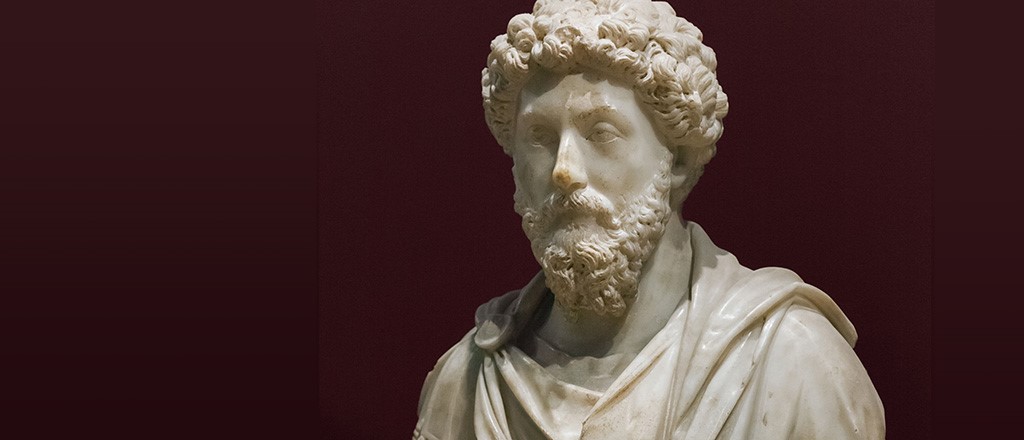
  • Was Marcus Aurelius an Agilist?

    Was Marcus Aurelius an Agilist?

    Lessons in Change from an Ancient Philosopher.

    In the run up to my 40th birthday, I thought I should read some classic philosophy. I’ve just finished reading Meditations, a collection of personal reflections by Roman Emperor Philosopher, Marcus Aurelius, written in the second century of the Common Era.

    I picked three such reflections (or ‘Chapters’ as they’re called) which I thought were humbling and important to bear in mind when thinking about the work we sometimes do as Agile Coaches and change agents.

    The numbers quoted below refer to the Book & Chapter.

    First, was a compelling reminder from 4.42:

    Change: nothing inherently bad in the process, nothing inherently good in the result.

    Here, Marcus Aurelius reminds us, even the evangelical change agents, that just because we say it’ll be better by doing things differently, it doesn’t necessarily make it so.

    We must always be careful to check ourselves against a deep-seated belief that changing things will improve them. There is, as Aurelius says, nothing inherently bad in the process of changing things and nothing inherently good in the result – we must work at both aspects.

    I’ve worked with people who assume that just because of a business model, framework, brand, etc. is what it is, that it’s inherently better at creating products and services that engage, inspire and wow customers than the competition. This is short-sighted thinking that risks hubris and complacency.

    We must work to understand the difficulties and challenges of change as we move through the process, which may be a good or bad process (however one might define ‘good’ or ‘bad’); a breeze or a quagmire. And we must not be precious about the result – it is wholly possible that change isn’t better – and in fact we need to shift direction and move elsewhere based on what we learn through the process.

    An important lesson for evangelists!

    Second, for those struggling with change, 7.18:

    Is someone afraid of change? Well, what can ever come to be without change? Or what is dearer or closer to the nature of the Whole than change? Can you yourself take your bath, unless the wood that heats it is not changed? Can you be fed, unless what you eat changes? Can any other of the benefits of life be achieved without change? Do you not see then that for you to be changed is equal, and equally necessary to the nature of the Whole?

    We often work with people who are afeared of change because of what it says about themselves, their roles, careers, industries; but this meditation gives us hope that everything changes – and that it is perfectly normal and natural. I work with people who don’t want to change, and I understand it: they’ve build successful, long careers doing things a certain way and change threatens it. In their hearts, they must truly understand that nothing remains still – through the career they have built, they will have changed – their practices, their skills, their identity, because we are human beings as part of nature – and change is natural.

    This Chapter gave me hope for those we partner with and walk alongside on the journey of change.

    And finally, 5.23:

    Keep in mind how fast things pass by and are gone—those that are now, and those to come. Existence flows past us like a river: the “what” is in constant flux, the “why” has a thousand variations. Nothing is stable, not even what’s right here. The infinity of past and future gapes before us—a chasm whose depths we cannot see. So it would take an idiot to feel self-importance or distress. Or any indignation, either. As if the things that irritate us lasted.

    This verse speaks to me on the nature of Agile product development. Things move fast and change happens every day (today we’re all excited about ChatGPT – whatever happened to Stable Diffusion? Has it come and gone already?) As is noted, the what and why have many variations; it’s only our hope that the ‘how’ (working with greater agility) is better (but that’s no guarantee from the first lesson). This meditation shows the folly of having long-term plans or being stressed at things slipping on a Gantt chart, for the future, as noted, gapes as a chasm before us and we cannot predict everything that will befall us in time.

    It’s also worth bearing in mind that if we Agilists ‘irritate’ others – that we probably won’t last either! A wise lesson in meeting people where they are.

    Some insightful lessons from 1850-year-old philosophy about navigating modern change.

    There were many other Chapters I’ve underlined for personal reflections on the themes of time, presence, death, the cyclical nature of things, nature itself, fate, and our place in the Whole. A most edifying read.

    Have you read Meditations? What stands out for you?

  • Why we must reclaim the human face of meetings

    Why we must reclaim the human face of meetings

    Do you know how big your ‘self-view’ video is on Zoom when someone else is sharing content? It’s pretty small, right? In fact, on my 27” monitor, when Zoom is fullscreen and someone is sharing content, every person’s video is about 1.5” x 1” (4cm x 2.5cm).

    Do you know how big the content is? On my monitor, it’s 16” x 10”. That means that you could fit about 100 people’s videos into the size of the content. Are we really saying that when someone is presenting, everyone else’s input is only worth about 1/100th of the value? No wonder people don’t bother contributing or turning their video on; the app is telling them they are not as valuable or worthy as whatever is being shared.

    This was thrown into sharp focus for me recently when I prepared for, and then delivered, an in-person workshop. The team and I spent lots of time crafting and refining slides in preparation for the event to drive the agenda and content. But when we started working together in person at the event, the slides faded into insignificance compared to the actual conversations that took place, and the space I was sharing with other human beings. Suddenly, the slide content was a mere backdrop, not a foreground, and the interactions and individuals took centre-stage. The engagement from participants was absolute, the interactions were insightful and fun, and the outcomes were undoubtedly better.

    When we are in person, the people are the most important thing.

    My personal and professional purpose is to liberate the greatness in others. I believe that humans are inherently brilliant, and if we can only find ways to help each other to switch off their censors and unleash their genius, we’ll all fly. And here was an event where, what I’d prepped, may have been in the way of liberating greatness. This event was a humbling reminder of what I instinctively knew anyway; that when we are in person, the people are the most important thing.

    There’s a building consensus that online, or e-learning, wasn’t successful for children during the pandemic. Whilst schools are all back in classrooms now, we haven’t yet applied some of this understanding to the corporate world. I’m certainly not advocating for getting everyone back into offices – in fact, I think most of the time, most of the work we do can be done from anywhere. When we are expecting to learn, collaborate, and workshop ideas through however, then prioritising the human attendees’ experience must be the best way.

    I make a distinction between just being ‘in-person’ and prioritising attendees, because I think we can do so much more through our current media of choice (Zoom or MS Teams or a.n.other) to recognise that we’re sharing the time and space together as ingenuous, brave, collaborative, thought-provoking human beings.

    I’ve been on two, online, two-day short courses recently. One course used only three slides, temporarily, over the entire duration of the course and it changed my life for the better. One had nearly 400 slides onscreen the whole time over two days and made me wish I’d made better life choices.

    I don’t believe this is all our fault. My hypothesis is that attendees on calls are acting in alignment with what the apps are telling them – that they not as valuable as the ‘content’ being shared. And, with this self-fulfilling prophecy, engagement declines, thinking stops, cameras go off, mics go on mute, and we’re reduced to a quiet box in the corner, overshadowed by what, visually, we’re being told is important – i.e., not us.

    We must reclaim the human face of meetingsespecially when we’re online. We must endeavour to think about the experiences of the attendees, show them their contribution matters, and value their input and creativity as human beings. I, for one, will hack-and-slash the number of slides I ever choose to use again on screen and stop sharing them as soon as I can, if it’s required at all. I encourage you to do the same. If we don’t, we risk losing the insights and inputs from the attendees that can sustain and save our organisations from irrelevance.

  • Is there a Place for Seasonality at Work?

    Is there a Place for Seasonality at Work?

    One of my favourite places to walk is Westonbirt Arboretum near our home. It’s a great way to get back to nature and clear my head whilst supporting conservation work. On my most recent visit, I was marvelling at the structures of the trees now that all the leaves have fallen. These marvellous, decades-old organisms are saving all their energy and growth for spring: fresh buds, flowers, leaves, fruit. And it got me wondering if nature can teach us something about this time of year away from the pressures of ‘new year’s resolutions’ and towards embracing seasonality in our working lives?

    From the first of January, the start of the new calendar year, we’re often encouraged to set new goals and resolutions, and yet it’s a very arbitrary date. If we look to the rest of the natural world, it’s not starting afresh – it is midwinter! Plants are saving energy for fresh buds; animals are hibernating and hunkering down to be ready for spring; and here we are ‘getting after it’, ‘living our best life’, making radical changes…then not sticking with it, getting ill, and burning out. It doesn’t make much sense, it doesn’t appear to be very sustainable, and yet LinkedIn is full of people ‘bringing it on’ and ‘owning 2023’.

    We are connected to nature too – being human beings.

    Yes, reflect on the lessons of the previous season, nourish yourself with wholesome food, more knowledge, and enjoy movement; clear out unnecessary clutter and excesses of the past, but also be gentle, warm, kind and compassionate to yourself too. And when the first buds of new ideas and new goals arise, they will do so with greater clarity and fresh energy too.

    This is an invitation to not feel as great a pressure to set all those big goals and get started on everything now. Listen to yourself and to the natural world and respond appropriately. Reflect on what’s worked, what hasn’t; think about what you want to try out; maybe even explore a couple of ideas and experiments but consider that there may be a genuinely more invigorating time for renewal later.

    I am not saying do not do anything now.

    I know that life continues, that business thrives, that organisations endure. I’m merely advocating for observing more seasonality in our work and life – to acknowledge that there is ebb and flow, rather than being constantly ‘on’. For when we are ‘on’ 24/7, we run down to nothing and have nothing wonderful left to give the world. And I know that each and every person does have something extraordinary to offer.

    Personally, I’ve set goals for the next quarter and have a vision for the longer-term, but I’m not worrying about new year’s resolutions.

    And when you are ready to make the connections between those big, far-away goals and the experimental actions you want to start with today, then check out my Outcomes Tree idea. It’s an agile, responsive, and natural way to live in alignment with your purpose, bring value to your work, and change outcomes for the better.

  • The most stunning leadership statement I heard this year 

    The most stunning leadership statement I heard this year 

    Leadership is hard. In any organisation, at any level, being a leader requires clarity, calm and consideration. It requires people to paint such a compelling picture of a possible future that it seems like it could be a reality today. So much of the role of leaders is based on how they speak – and whether those words match their actions.

    I was wowed when I heard this statement from a leader’s opening remarks earlier this year. Rodrigo leads part of a large multi-national financial services provider. His words and actions impact work that serves millions of customers. He leads quarterly planning events that have thousands of attendees, and during his opening address, he said something that will stay with me forever:

    Your children know my name and I’ll have never met them. Your team members’ children know your name. What do you want them to say about you?”

    This was such an ingeniously human way of describing the impact leaders have, not just in the workplace, but in our lives more broadly. He knew that, whilst he won’t ever meet many of his team members’ children, they have probably heard his name at home. And he wants his people to talk about him positively to their children. By extension, he was making an extraordinary invitation to consider the impact his leaders have on their respective team members.  

    We can all think of leaders and managers we have talked about with disdain at home – to loved ones, friends, family (and children pick up on everything!). Those people close to us will have formed views and opinions of that leader and, potentially, by extension, that organisation. And because these people love us and want what’s best for us, their views will be strong-held based on what they hear. So, this wonderful statement was to ask us to consider how we’d like to be talked about when we’re not there. Do we want to be the leader that people are stressed and upset about and worry about interacting with, keeping people awake on a Sunday night; or do we want to be the leader that enthuses people to speak well about our organisation at home, to look forward to working with them, to bringing their best selves to work with us?

    As my coaching supervisor says to me, ‘how we do anything is how we do everything’and here’s a perfect example of how this can play out: our lives are complex webs of social interactions where each part of the system has an impact on the other.

    What kind of impact do you want to have on others?

  • My top three non-fiction reads of 2022.

    In January this year, I took Cal Newport’s Analog January challenge and left all social media for a month. With the scrolling-time regained, I did as Cal suggested and picked up a book instead. Surprise, surprise, you get through more books if you do that! I enjoyed reading (and being mostly social-media free) so much, that I’ve kept up the habit for most of the year. 

    Here are three non-fiction books I read this year that changed my perspective on things. 

    1. Beyond Command and Control, John Seddon et al 

    This provocative, pokey and down-right hilarious-at-times-with-cynicism book argues that the problem with command and control wasn’t the command bit (‘sometimes bosses need to be bossy’ as Seddon tells us) but the controls bit – and that most organisations are measuring and controlling the wrong things and perpetually failing their customers and users (known as ‘failure demand’ in this book) . Whilst the basic premise of structuring around flow of value to customers and users isn’t new, the provocations Seddon makes against how illogical most workflows seem is fresh and made me laugh out loud on several occasions – particularly some of the disparaging views on how agility and digitisation is often misused! 

    Perhaps the most wonderful thought in this book is that all of those hideous old management styles were created by human beings, so we, as ingenious, capable, insightful humans, are completely capable of inventing new leadership structures that help our colleagues do excellent work, and our customers and users get what they really want and need. That’s reassuring and hopeful. 

    2. Essentialism, Greg McKeown

    The main tenet for this book is built around a mantra I’ve had on my wall for many years: Dieter Rams (influential industrial designer) principle of ‘Less, but better’. McKeown applies this principle to our lives – offering us the opportunity to step away from being ‘all things to all people’ (who McKeown calls Nonessentialists) who feel like they have to do everything, perpetually pursuing more, and ultimately living an unsatisfactory existence – to one of ‘less but better’ (an Essentialist) that trades-off things, discerns what’s really important, and lives a life that truly matters. 

    I have the model stuck up on my wall and often look to it for guidance how to handle all the many things I’d like to do with my time. The stand out thought of this book for me being that we HAVE options and we MAKE choices. This, I feel, puts the power back in our hands as the human agents of our own destiny – making proactive choices from the many options we have available. 

    3. The Promise that Changes Everything: I won’t interrupt you, Nancy Kline 

    I have chosen this book not so much because of the content, but what it provoked. I’d been a fan of the Thinking Environment since reading Time to Think a few years ago. This latest offering builds on the work in that book, covering some of the same ground, and also bringing some fresh insights on the damage that interruption can do to the quality of our thinking (did you know that being interrupted sets off the same bits of the brain as a physical assault?). The reason I chose this book is that it finally gave me the push to do some Time to Think training which I’d been meaning to do. The Foundations course I’ve already raved about on LinkedIn was the most wonderful couple of days that has enlightened me to this fantastic way of helping others to think well. I’m looking forward to doing the Facilitator Course, hopefully in 2023. 

    Honourable mentions for:

    • Finite and Infinite Games, James P. Carse – an utterly brilliant vision for a life of possibility and play. It should probably be in my top three… it takes some unpacking as every sentence is filled with consideration, but once digested, it’s a wonderful, wonderful book I’ll re-read next year. 
    • A World Without Email, Cal Newport – I’m always talking about Cal Newport, and this latest addition is a great vision for the workplace with practical tactics and strategies to employ to help us all work deeper and without distraction. 
    • Quiet, Susan Cain – helped me to embrace and understand my introversion (yes, I’m an introvert at heart…I play a good extravert when I need to, but I need time alone to recharge). 
    • The End of Average, Todd Rose – helped me to reject some of the damaging notions I held about being average. 

    What have been your top books this year? 

  • Why I’ve decided to #DeleteFacebook

    I’ve thought about this a bit, and I’ve read and listened to a bit, and I’ve decided that I’m going to leave Facebook.

    In a way, I wasn’t surprised by the Cambridge Analytica affair. I’m cynical enough to think that Facebook wouldn’t follow up on data destruction, but I didn’t quite realise the scale and breadth of the access that Facebook and third party apps have. 

    I’ve signed into services using Facebook for convenience sake, like many others have, but I didn’t really realise what I was giving access to. I had a look through the settings and found some really disturbing things that third party apps have access to. One particular menu showed that friends’ third-party apps could have access to my information – including things like my ‘current location’ and whether or not I was online. This I found deeply disturbing. 

    I’ll just go through that again. My friends’ third party apps could access whether or not I was online and my current location. What?! I’ve turned this all off now, but it was on by default. 

    Thankfully, I don’t have an Android device, but I hear that Facebook has been able to access Android users phone records, including who they call, when, regularity and for how long.

    These revelations have caused me to look into this in a little more detail and I don’t think I can stay with Facebook any longer. The price of paying with my data and privacy in exchange for a “free” service is too high a price for me. 

    Facebook-thumbs-down

    Apparently, Facebook has been conducting behaviour and emotional manipulation tests for years (https://www.forbes.com/sites/kashmirhill/2014/06/28/facebook-manipulated-689003-users-emotions-for-science/#7d82be6c197c). They have been conducting experiments on unwitting users, to tweak their feed, for example to lots of sad stories and ads and posts to then see if your subsequent posts are sad. And they can. A private company, with two billion users, can manipulate the information you see to influence your emotions and behaviours. 

    Just let that sink in for a minute. That’s a lot of power and influence. To know my likes and dislikes, my preferences and views, my photographs and memories. That’s too much for a single company that makes its money by selling data and advertising to own. I know it’s been my choice to share that information in the first place, but I’ve changed my mind now and I don’t want to any more. 

    I’m sure they think they’re doing good work at Facebook and Google. To connect people sounds like a noble mission, but it’s all for sale. Connected could have been positive. Connected so that more stuff can be sold or my behaviour manipulated is not so positive. They say that when the services are free, you are the product, and I don’t fancy being Facebook’s product any more. 

    If behaviour and emotional manipulation is already possible with the data that’s shared on Facebook, imagine what will be possible with the data we share with these “free” services in the future? And this is the bit that scares me most. These are not social media companies – these are private surveillance and information gathering companies who collate data, private thoughts, preferences and memories and sell them on for the highest price. Imagine what will be possible with AI and algorithms in the future with the data that’s provided. I’ve heard it described as in other technologies, these developments would be called ‘insecurities’ in a system that, with the appropriate resilience procedures, would be patched to cover them. A human brain cannot be patched. It will become more and more vulnerable to attack from the more complex processes that Facebook and the like will invent. 

    I’m hardly a technophobe. I bloody love technology, but I think technology should serve humankind, not manipulate it. To give away our data and, in time, our agency, to machines, leads to Skynet and Judgement Day. Technology should be helping me get things done that I want to do – at my service. I love the idea of ambient or ‘voice-first’ technologies to get stuff done, but there’s no way I would allow a Google Home or Alexa into my home. Companies, who sole purpose is to sell data and adverts, in my home, hearing my private conversations and potentially monetising that? No way.

    I saw somewhere that if you wanted Facebook without data selling, you’d have to pay something like £70-£100 per year. I don’t think Facebook is worth that (not that I have the option even if I did think it was worth it), and I think information about my personal preferences are worth more to Facebook. So it’s not a good trade. 

    Inertia and FOMO have stopped me from doing this before. I have been connected with brilliant people and have been put back in touch with friends that I otherwise wouldn’t hear from – and I will miss them. I will miss seeing stories of incredible joy and positivity and may miss stories of sadness, which is a shame. 

    So, when GDPR kicks in at the end of May, and I will have some right to be forgotten by Facebook, I will exercise that right and delete my Facebook account. I know that WhatsApp and Instagram are owned by Facebook too, but I won’t be deleting them yet. I think Google is an equally terrifying beast and I will think about getting out of Google soon (you know Google has the right to look through your email and pictures if you use their services, right?). I think Google is almost harder as their services are excellent. As far as I know, Apple is a different business which makes its money out of high profit margin hardware and not selling data, so I feel more comfortable using their products and services. 

    I don’t claim to be an expert on any of this, and I might be misinformed, but from what I understand, I want out. 

    I’m only one user of 2bn, so I don’t think Zuckerberg will mind (he’s been quoted as calling users “dumb f*cks” anyway), but I urge you to consider the value of your data in exchange for the “free” service you think you’re getting.

  • What No One Tells You About Guilt and Embarrassment

    What No One Tells You About Guilt and Embarrassment

    Hands up who has been ‘guilt-tripped’ into working late to finish a report or assignment. OK, hands down. Hands up anyone who has felt embarrassed by their dad’s dancing. Anyone? Yeah. Well, here’s the thing:

    Guilt and embarrassment are not a useful emotions.

    What do I mean, ‘useful’? I learned recently that there are, in essence, four emotions. And those four emotions are useful things. The four essential emotions are:

    (more…)

  • How to Rock a Pitch

    How to Rock a Pitch

    I recall the first time I noticed how much people love over-acting. I’ve always loved theatre. I’ve been fortunate enough to act, direct, design, light, write and watch many theatrical performance. I remember this one time I was watching a theatre production of a Shakespeare play and one of the characters comes in to find his pal is dead. He wails and shouts and screams and ends up dead herself. I remember feeling a bit awkward about his performance. It was a bit too hammy for me.

    ott acting

    (more…)