Blog

  • Is this the best design of the 21st Century so far?

    Is this the best design of the 21st Century so far?

    I’m a massive Apple fan and therefore a massive fan of legendary British designer, Sir Jonathan Ive .
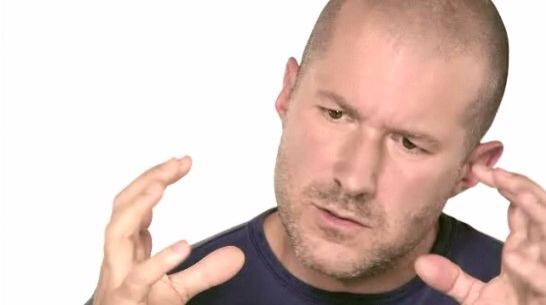
    There are so many pictures of Jony Ive, this one makes me laugh…but he is good

    One of my favourite quotes from him is:

    “We try to develop products that seem somehow inevitable. That leave you with the sense that that’s the only possible solution that makes sense,” he explains. “Our products are tools and we don’t want design to get in the way. We’re trying to bring simplicity and clarity, we’re trying to order the products.

    “I think subconsciously people are remarkably discerning. I think that they can sense care.”

    Great design is design where the user instinctively knows what to do with it. It is, in Jony Ive’s words, inevitable. All design leads the user to action – whether that be to sit on a beautifully crafted chair, hit a nail with a solid hammer or move something with wheels. But how often do you, as the user, feel forgotten about? Like the product you’re using is one of millions, made impersonally, isn’t easy to use, uncomfortable, cheap, or you just have no idea what on earth you’re supposed to do as a result of this piece of design. Nasty. Poorly designed.

    (more…)

  • Work/Life Balance isn’t about the number of hours you work…

    Work/Life balance, right?
    Work/Life balance, right?

    Mon-Fri 9-5 sounds like a good work/life balance

    I have a confession to make…I don’t work ridiculous hours. However, I did make the mistake of inferring that, because most evenings and weekends were not at work, I had a great work/life balance. I did not. It turns out that the work/life balance split is not about hours worked, but about working on work and working on life…

    work_life_balance

    (more…)

  • Here’s a great aspiration for your team

    You know you’ve got a good team when…

    I’m sure there are hundreds of responses to this prompt. One that really sticks in my mind was from one team session I was working on. We were discussing our hopes and aspirations for the team and I was asking them what would you see and what would you hear (by the way, this phrase is brilliant for exploring notional ideas like respect, trust, teamwork).

    The response that stuck with me is

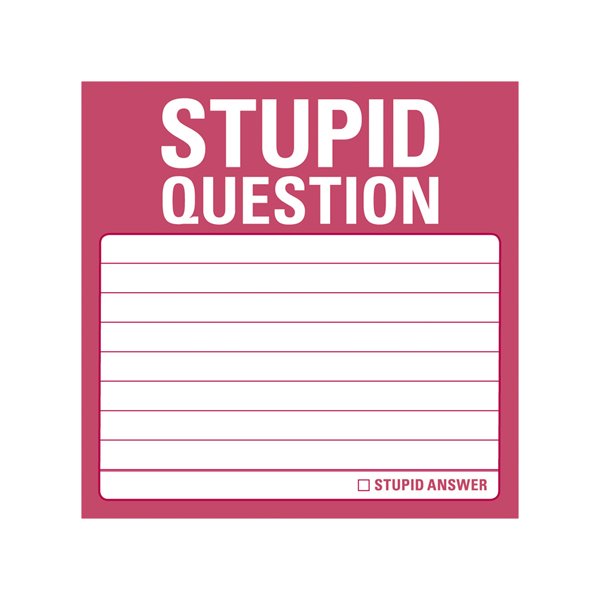
    “we will hear stupid questions”

    What a fantastic aspiration! A team that gets on well enough and is open enough not to worry about what other people will think if they ask a stupid question; where the stupid question is welcome.

    Ask a stupid question
    Ask a stupid question

    Hurrah for stupid questions. In fact, is the stupidest question the one you don’t ask?!

    How do you know when you’ve got a good team?

  • Do you dare choose your audience?

    I heard a very interesting point yesterday about marketing and the distribution curve thing, which got me thinking about daring to choose a target audience.

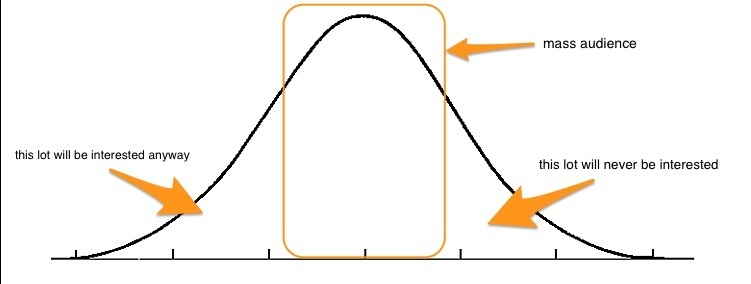
    The point being that in traditional terms, marketers try to target the ‘mass audience’ – i.e. that there is a large group of people who would want or need what you’re trying to sell and you make it as attractive as possible to that large group of people. On the left hand side of the mass audience would be the ‘early adopters’ who would buy what you’re selling anyway, and on the right hand side would be the ‘never evers’ who will never be interested in what you’re selling. The middle ground was the hallowed ground.

    Normal distribution curve
    Normal distribution curve

    Not any more.

    (more…)

  • Of, by and for…why a co-operative should be a perfectly promotable business model

    The co-operative is currently going through a bit of a tough time which got me thinking back to some work I did a while ago to try to help express the uniqueness of a co-operative business model.

    One of the things I explored was about businesses having to excel in one, two or three aspects…most can’t do all three, but I believe a co-operative is uniquely placed to utilise this model…

    Businesses need to:

    • Be of the customer: a business that shares the values of its customers 
    • Be by the customer: a business that is shaped and run by its customers
    • Be for the customer: a business that is focused on an excellent customer experience

    (more…)

  • The joker and the Devil’s advocate…introducing creativity and challenge to meetings

    A while ago, I did some work with my team thinking about what makes a team great, what kind of things we would see and hear and start to prioritise which aspects we wanted to work most on. We chose two things in particular:

    1. Creativity and innovation
    2. Constructively and safely challenge in meetings

    I went away and had a think about some ideas that might help facilitate these aspects during meetings. I came up with an idea I’m going to share here…

      (more…)

  • A presentation is a creative entity in its own right

    OK, OK, so I haven’t kept to my promise to blog every couple of weeks throughout the strategy process. Sorry. I found that the actual doing got in the way of reflecting through this blog.

    Anyway, having completed a lot of the strategy work, I needed to present it to lots of different people, so today’s blog is about presentations.

    The most important mindset for presentation, I believe, is to think of your presentation as a creative entity in its own right. 

    A presentation is a creative entity in its own right

    It’s so important, I’ve said it twice.

    (more…)

  • Two ideas for stakeholder feedback

    Before asking your stakeholders for feedback, work out what you need feedback on

    It’s been just over 2 weeks since my previous blog on the 9 and a half step strategic process which I’ve been following and part of the reason this blog is a little late is because of all of the stakeholder engagement and feedback I’ve been involved with and am preparing.

    This is also my first mobile blog-from my iPad, sat in a Manchester apartment between today and the next!

    Today’s blog is about stakeholder engagement and getting feedback. Working for a co-operative means that I’m not in short supply of stakeholders…many of which want a say in how the strategy I’m developing will come into being. I think I’ve learnt two really important things for stakeholder feedback:

    (more…)

  • A nine (and a half) step strategic process

    Last time out was my seven starter points for strategic thinking and today I’m going to talk through the nine (and a half) step strategic process I’ve been following in my new role.

    Step 1 – Know yourself

    Sounds obvious, right? But this is where you’ve got to start. This isn’t about just knowing ‘I’m Sam and I’m an [fill in the blank]’. Knowing yourself is fundamental stuff – WHY do you do what you’re setting out to do with this strategy. Not just the stuff at the end of it (like selling stuff, engaging people, turning a profit) but what’s a the core. You might like to go back to the starter points to determine what you’re about.

    When you know what you stand for, you’ll be able to determine your vision and mission. Vision and mission differ – to have both, I think, is relatively important. Your vision is virtually unobtainable – it’s the utopia you are striving for. Your mission is focused on the length of the strategy (i.e. what do you see will happen in 3-5 years from now?).

    Your vision and mission will lead to loads of questions about ‘how will we know’? This is also where you need to establish some goals and targets.

    (more…)

  • Seven starter points for strategic thinking

    FROM HERE TO THERE A STRATEGY IS A JOURNEY

    My first blog about my new position is about seven starter points I’ve had to consider before I even get going on the content of the strategy. Things I thought I’d share as I guess they apply to every strategy process.

    My first frame of reference for the strategy was to think about a journey. After all, a strategy sets out how you get from your starting point to somewhere else.

    To help us determine the direction of travel, I needed to consider seven key things that you might want to think about for your strategy. As with any journey, there a number of considerations before you travel:

    1. What’s the destination? Where are we going?
    2. What mode of transport should we use?
    3. How do we keep the travellers safe and happy?
    4. How do we keep the drivers happy?
    5. How do we have the best journey possible? It is the fastest, most economical, most scenic or shortest?
    6. Programming the SatNav or reading the map
    7. Observing the Highway Code

    Only when you know these things can we actually plan the route and get on our way.

    (more…)