Category: Intuition

  • Was Marcus Aurelius an Agilist?

    Was Marcus Aurelius an Agilist?

    Lessons in Change from an Ancient Philosopher.

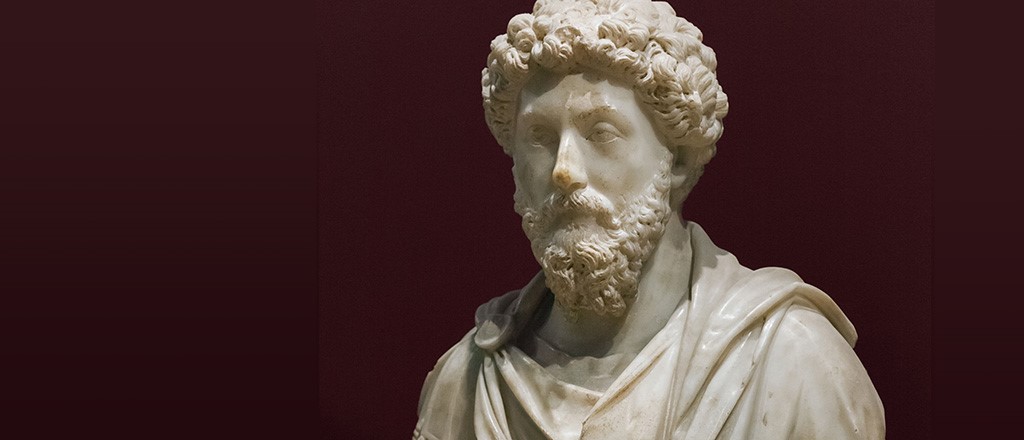
    In the run up to my 40th birthday, I thought I should read some classic philosophy. I’ve just finished reading Meditations, a collection of personal reflections by Roman Emperor Philosopher, Marcus Aurelius, written in the second century of the Common Era.

    I picked three such reflections (or ‘Chapters’ as they’re called) which I thought were humbling and important to bear in mind when thinking about the work we sometimes do as Agile Coaches and change agents.

    The numbers quoted below refer to the Book & Chapter.

    First, was a compelling reminder from 4.42:

    Change: nothing inherently bad in the process, nothing inherently good in the result.

    Here, Marcus Aurelius reminds us, even the evangelical change agents, that just because we say it’ll be better by doing things differently, it doesn’t necessarily make it so.

    We must always be careful to check ourselves against a deep-seated belief that changing things will improve them. There is, as Aurelius says, nothing inherently bad in the process of changing things and nothing inherently good in the result – we must work at both aspects.

    I’ve worked with people who assume that just because of a business model, framework, brand, etc. is what it is, that it’s inherently better at creating products and services that engage, inspire and wow customers than the competition. This is short-sighted thinking that risks hubris and complacency.

    We must work to understand the difficulties and challenges of change as we move through the process, which may be a good or bad process (however one might define ‘good’ or ‘bad’); a breeze or a quagmire. And we must not be precious about the result – it is wholly possible that change isn’t better – and in fact we need to shift direction and move elsewhere based on what we learn through the process.

    An important lesson for evangelists!

    Second, for those struggling with change, 7.18:

    Is someone afraid of change? Well, what can ever come to be without change? Or what is dearer or closer to the nature of the Whole than change? Can you yourself take your bath, unless the wood that heats it is not changed? Can you be fed, unless what you eat changes? Can any other of the benefits of life be achieved without change? Do you not see then that for you to be changed is equal, and equally necessary to the nature of the Whole?

    We often work with people who are afeared of change because of what it says about themselves, their roles, careers, industries; but this meditation gives us hope that everything changes – and that it is perfectly normal and natural. I work with people who don’t want to change, and I understand it: they’ve build successful, long careers doing things a certain way and change threatens it. In their hearts, they must truly understand that nothing remains still – through the career they have built, they will have changed – their practices, their skills, their identity, because we are human beings as part of nature – and change is natural.

    This Chapter gave me hope for those we partner with and walk alongside on the journey of change.

    And finally, 5.23:

    Keep in mind how fast things pass by and are gone—those that are now, and those to come. Existence flows past us like a river: the “what” is in constant flux, the “why” has a thousand variations. Nothing is stable, not even what’s right here. The infinity of past and future gapes before us—a chasm whose depths we cannot see. So it would take an idiot to feel self-importance or distress. Or any indignation, either. As if the things that irritate us lasted.

    This verse speaks to me on the nature of Agile product development. Things move fast and change happens every day (today we’re all excited about ChatGPT – whatever happened to Stable Diffusion? Has it come and gone already?) As is noted, the what and why have many variations; it’s only our hope that the ‘how’ (working with greater agility) is better (but that’s no guarantee from the first lesson). This meditation shows the folly of having long-term plans or being stressed at things slipping on a Gantt chart, for the future, as noted, gapes as a chasm before us and we cannot predict everything that will befall us in time.

    It’s also worth bearing in mind that if we Agilists ‘irritate’ others – that we probably won’t last either! A wise lesson in meeting people where they are.

    Some insightful lessons from 1850-year-old philosophy about navigating modern change.

    There were many other Chapters I’ve underlined for personal reflections on the themes of time, presence, death, the cyclical nature of things, nature itself, fate, and our place in the Whole. A most edifying read.

    Have you read Meditations? What stands out for you?

  • Why we must reclaim the human face of meetings

    Why we must reclaim the human face of meetings

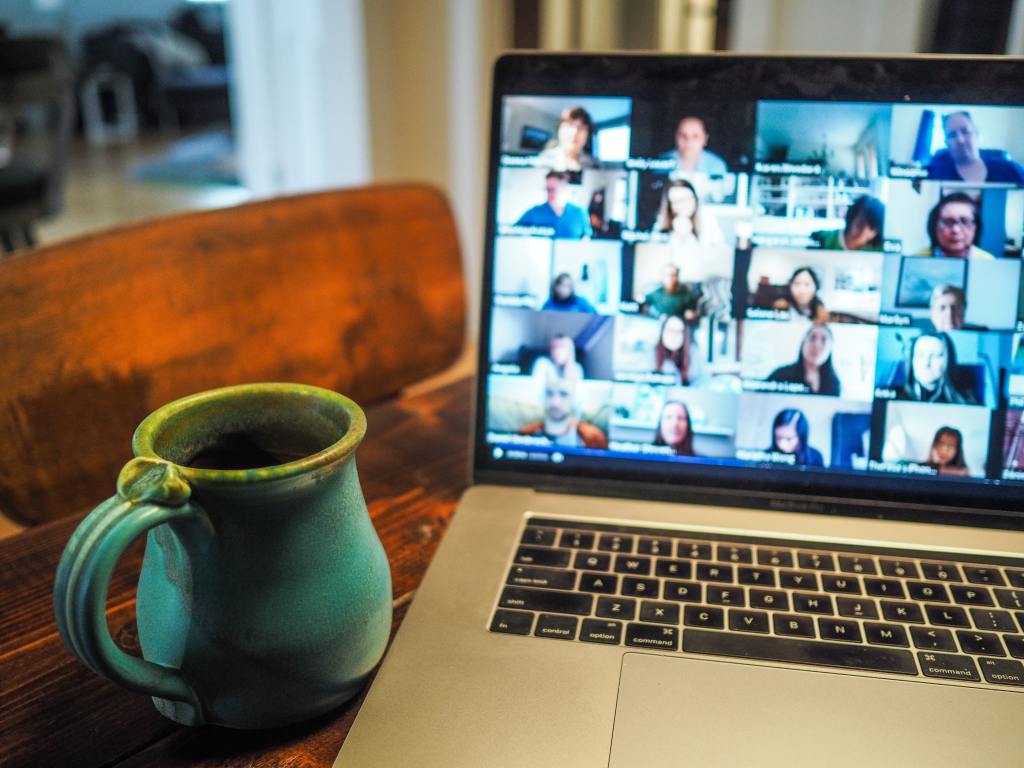
    Do you know how big your ‘self-view’ video is on Zoom when someone else is sharing content? It’s pretty small, right? In fact, on my 27” monitor, when Zoom is fullscreen and someone is sharing content, every person’s video is about 1.5” x 1” (4cm x 2.5cm).

    Do you know how big the content is? On my monitor, it’s 16” x 10”. That means that you could fit about 100 people’s videos into the size of the content. Are we really saying that when someone is presenting, everyone else’s input is only worth about 1/100th of the value? No wonder people don’t bother contributing or turning their video on; the app is telling them they are not as valuable or worthy as whatever is being shared.

    This was thrown into sharp focus for me recently when I prepared for, and then delivered, an in-person workshop. The team and I spent lots of time crafting and refining slides in preparation for the event to drive the agenda and content. But when we started working together in person at the event, the slides faded into insignificance compared to the actual conversations that took place, and the space I was sharing with other human beings. Suddenly, the slide content was a mere backdrop, not a foreground, and the interactions and individuals took centre-stage. The engagement from participants was absolute, the interactions were insightful and fun, and the outcomes were undoubtedly better.

    When we are in person, the people are the most important thing.

    My personal and professional purpose is to liberate the greatness in others. I believe that humans are inherently brilliant, and if we can only find ways to help each other to switch off their censors and unleash their genius, we’ll all fly. And here was an event where, what I’d prepped, may have been in the way of liberating greatness. This event was a humbling reminder of what I instinctively knew anyway; that when we are in person, the people are the most important thing.

    There’s a building consensus that online, or e-learning, wasn’t successful for children during the pandemic. Whilst schools are all back in classrooms now, we haven’t yet applied some of this understanding to the corporate world. I’m certainly not advocating for getting everyone back into offices – in fact, I think most of the time, most of the work we do can be done from anywhere. When we are expecting to learn, collaborate, and workshop ideas through however, then prioritising the human attendees’ experience must be the best way.

    I make a distinction between just being ‘in-person’ and prioritising attendees, because I think we can do so much more through our current media of choice (Zoom or MS Teams or a.n.other) to recognise that we’re sharing the time and space together as ingenuous, brave, collaborative, thought-provoking human beings.

    I’ve been on two, online, two-day short courses recently. One course used only three slides, temporarily, over the entire duration of the course and it changed my life for the better. One had nearly 400 slides onscreen the whole time over two days and made me wish I’d made better life choices.

    I don’t believe this is all our fault. My hypothesis is that attendees on calls are acting in alignment with what the apps are telling them – that they not as valuable as the ‘content’ being shared. And, with this self-fulfilling prophecy, engagement declines, thinking stops, cameras go off, mics go on mute, and we’re reduced to a quiet box in the corner, overshadowed by what, visually, we’re being told is important – i.e., not us.

    We must reclaim the human face of meetingsespecially when we’re online. We must endeavour to think about the experiences of the attendees, show them their contribution matters, and value their input and creativity as human beings. I, for one, will hack-and-slash the number of slides I ever choose to use again on screen and stop sharing them as soon as I can, if it’s required at all. I encourage you to do the same. If we don’t, we risk losing the insights and inputs from the attendees that can sustain and save our organisations from irrelevance.

  • Stop Pretending, and Start Innovating

    Stop Pretending, and Start Innovating

    I saw a really interesting position listed on the vacancies list called Head of Innovation the other day. I love the idea of innovation and I have sometimes been called ‘innovative’ and it got me thinking, if that were me, what would innovation need to thrive? Innovation doesn’t just happen, I don’t suppose. It needs certain parameters to happen. But what might those parameters be? Too restrictive and innovation is stifled. Too broad and nothing ever gets done. So what are the components of innovation? Well, here are my ideas:


    (more…)