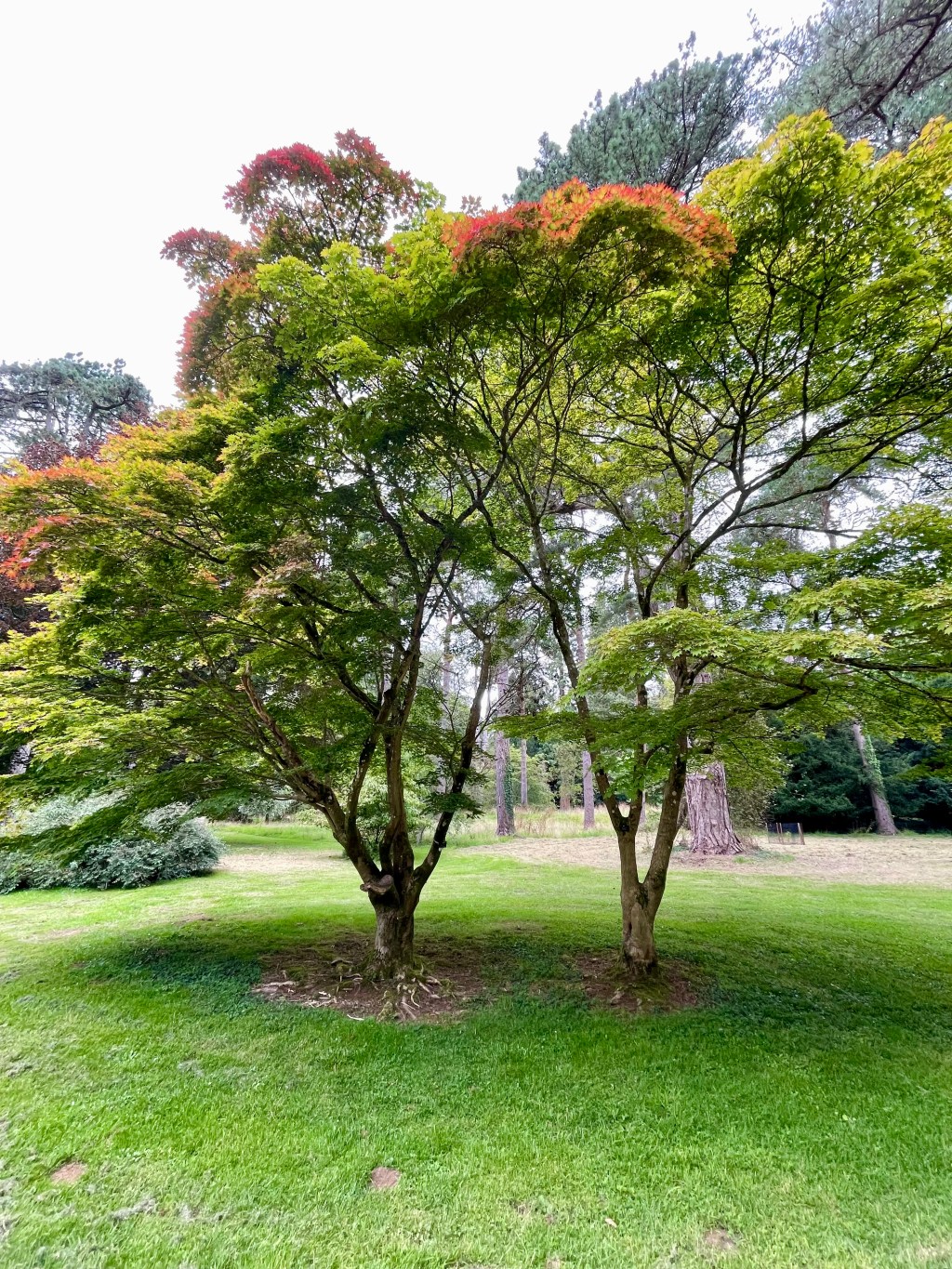
Another trip to Westonbirt Arboretum, another incredibly valuable lesson in the development of the Outcomes Tree. I was so enthused, I took a picture. Check out this beautiful Acer tree:
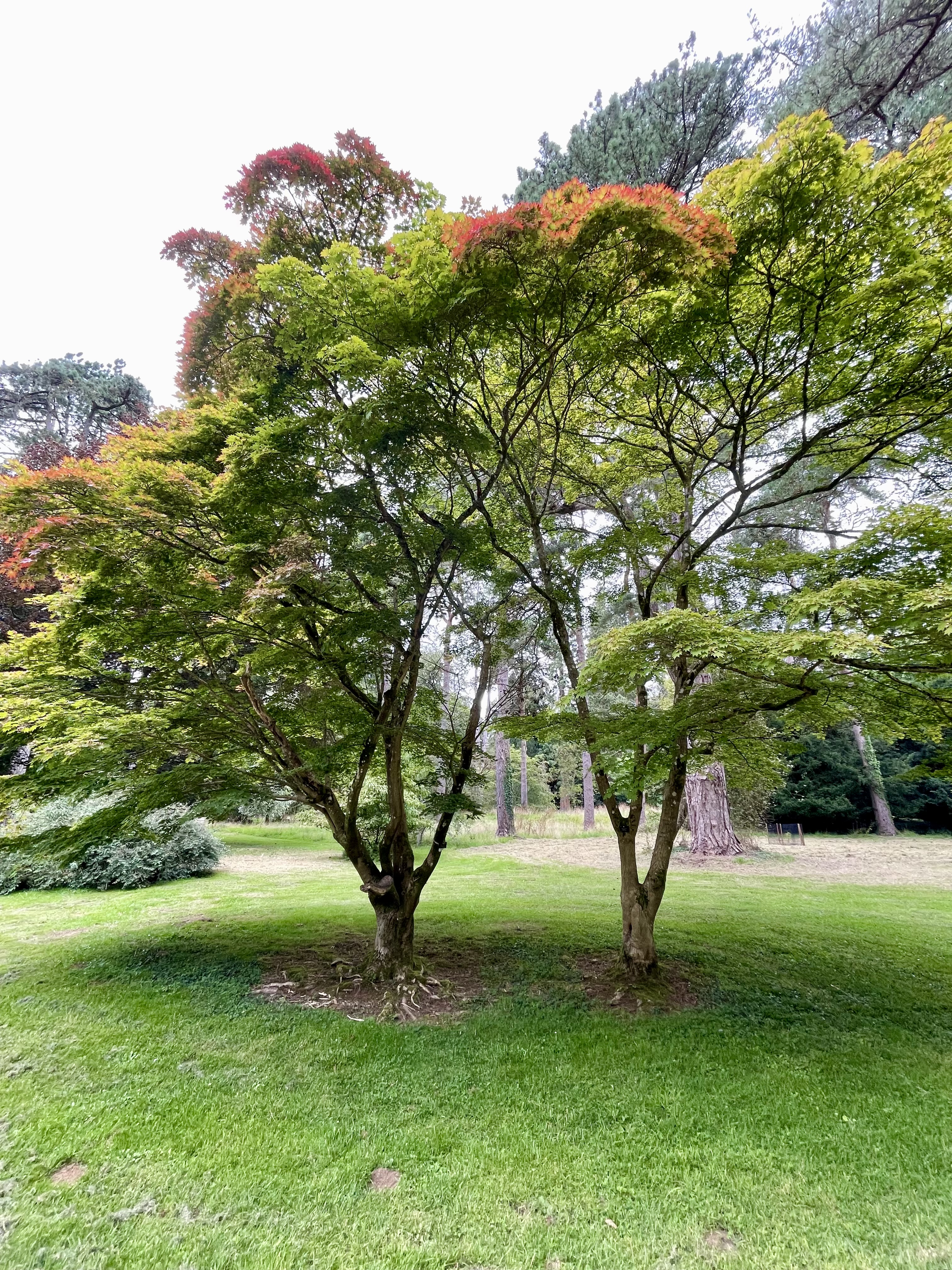
Look at the gorgeous canopy, the perfection of the Japanese Maple leaves – extraordinarily satisfying, yes? Such perfection in nature! Look down the branches – layers of growth and life. Then to the trunk…hang on…there’s two trunks! Two trees! Living in perfect harmony with each other. Check those leaves again – oh yes, the ones on the right are slightly more mature, a reddening in the pigment compared to the ones on the left. Two lives, combined as one.
Multiple Trees at Work
In a recent Outcomes Tree workshop, someone asked me how it works if there are multiple trees in an organisation. This picture is, I think, a healthy metaphor for answering that question.
Very often in organisations, there’s a lot of land-grabbing, empire-building, whatever you want to call it – it’s the equivalent of fighting for the sun at the expense of everything else around. It’s a desperate and limiting pursuit of power at the expense of others. It actually reduces the overall impact of the organisation, demoralises some and promotes others. What the Acers teach us is that, when we are working together, there’s space for both of us. See how each tree makes space for the other; how they flourish in their respective space and limit their overlap; and ultimately, how they appear united as one single canopy.
When using multiple Outcomes Trees in an organisation, we need to look to see if the overall canopy makes sense.
Do some outcomes cede way for others so there’s an overall, natural coherence beyond the individual pursuit?
Where there’s space for our specialism, can we thrive and grow? Where there’s overlap, can we combine or cede growth for the benefit of the overall?
I understand ceding looks like giving up something or giving it away but, you can see here, it’s natural for the benefit of the overall. There is room for all of us. There is abundance if we embrace it. Internal politics and aggression will be to any organisations detriment, not growth, and land-grabbing doesn’t help. Coherent, generous growth with an abundance mindset will endure.
Mature leaves=mature leaders
And what about the more mature leaves? What can they teach us? I believe they show us that in a healthy organisation, there are some experiments more advanced in their learning than others, and we can follow their lead; I also believe it shows us that the more mature people are in an organisation, the more willing they are to ‘go first’ and forge a bold, new set of outcomes for the future. The reddened leaves are going first to provide their energy back to the tree – and our leaders can do the same for our organisations.
Dare you cede something for the benefit of the canopy?
The impression from the outside of any organisation should be one, coherent experience (or canopy), even if, internally, it means we cede growth to others for the overall benefit of the customer or user experience.
Does your canopy of work make sense? Is there too much overlap? Can you cede control over some things to promote growth overall?
Watch the FREE Green Shoots introduction to the Outcomes Tree to get started growing your own!
 Sam Grayston