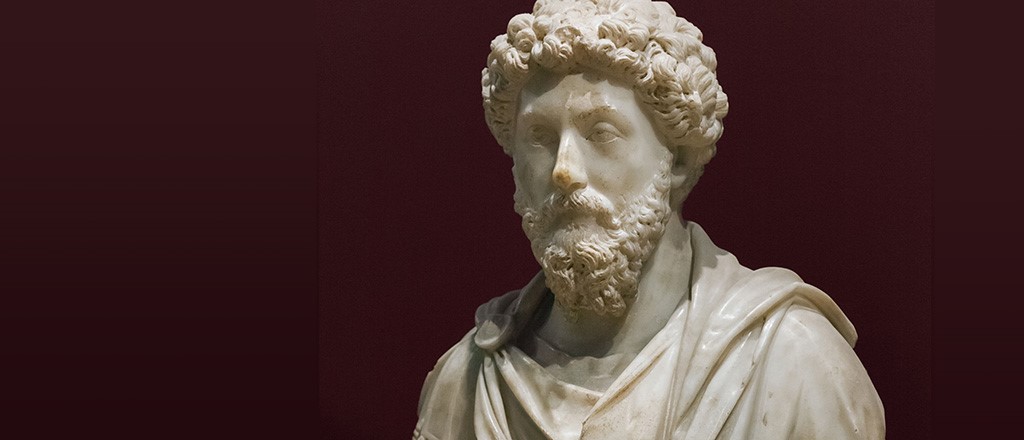
Lessons in Change from an Ancient Philosopher.

In the run up to my 40th birthday, I thought I should read some classic philosophy. I’ve just finished reading Meditations, a collection of personal reflections by Roman Emperor Philosopher, Marcus Aurelius, written in the second century of the Common Era.
I picked three such reflections (or ‘Chapters’ as they’re called) which I thought were humbling and important to bear in mind when thinking about the work we sometimes do as Agile Coaches and change agents.
The numbers quoted below refer to the Book & Chapter.
First, was a compelling reminder from 4.42:
Change: nothing inherently bad in the process, nothing inherently good in the result.
Here, Marcus Aurelius reminds us, even the evangelical change agents, that just because we say it’ll be better by doing things differently, it doesn’t necessarily make it so.
We must always be careful to check ourselves against a deep-seated belief that changing things will improve them. There is, as Aurelius says, nothing inherently bad in the process of changing things and nothing inherently good in the result – we must work at both aspects.
I’ve worked with people who assume that just because of a business model, framework, brand, etc. is what it is, that it’s inherently better at creating products and services that engage, inspire and wow customers than the competition. This is short-sighted thinking that risks hubris and complacency.
We must work to understand the difficulties and challenges of change as we move through the process, which may be a good or bad process (however one might define ‘good’ or ‘bad’); a breeze or a quagmire. And we must not be precious about the result – it is wholly possible that change isn’t better – and in fact we need to shift direction and move elsewhere based on what we learn through the process.
An important lesson for evangelists!
Second, for those struggling with change, 7.18:
Is someone afraid of change? Well, what can ever come to be without change? Or what is dearer or closer to the nature of the Whole than change? Can you yourself take your bath, unless the wood that heats it is not changed? Can you be fed, unless what you eat changes? Can any other of the benefits of life be achieved without change? Do you not see then that for you to be changed is equal, and equally necessary to the nature of the Whole?
We often work with people who are afeared of change because of what it says about themselves, their roles, careers, industries; but this meditation gives us hope that everything changes – and that it is perfectly normal and natural. I work with people who don’t want to change, and I understand it: they’ve build successful, long careers doing things a certain way and change threatens it. In their hearts, they must truly understand that nothing remains still – through the career they have built, they will have changed – their practices, their skills, their identity, because we are human beings as part of nature – and change is natural.
This Chapter gave me hope for those we partner with and walk alongside on the journey of change.
And finally, 5.23:
Keep in mind how fast things pass by and are gone—those that are now, and those to come. Existence flows past us like a river: the “what” is in constant flux, the “why” has a thousand variations. Nothing is stable, not even what’s right here. The infinity of past and future gapes before us—a chasm whose depths we cannot see. So it would take an idiot to feel self-importance or distress. Or any indignation, either. As if the things that irritate us lasted.
This verse speaks to me on the nature of Agile product development. Things move fast and change happens every day (today we’re all excited about ChatGPT – whatever happened to Stable Diffusion? Has it come and gone already?) As is noted, the what and why have many variations; it’s only our hope that the ‘how’ (working with greater agility) is better (but that’s no guarantee from the first lesson). This meditation shows the folly of having long-term plans or being stressed at things slipping on a Gantt chart, for the future, as noted, gapes as a chasm before us and we cannot predict everything that will befall us in time.
It’s also worth bearing in mind that if we Agilists ‘irritate’ others – that we probably won’t last either! A wise lesson in meeting people where they are.
Some insightful lessons from 1850-year-old philosophy about navigating modern change.
There were many other Chapters I’ve underlined for personal reflections on the themes of time, presence, death, the cyclical nature of things, nature itself, fate, and our place in the Whole. A most edifying read.
 Sam Grayston