Tag: Consideration

  • Why we must reclaim the human face of meetings

    Why we must reclaim the human face of meetings

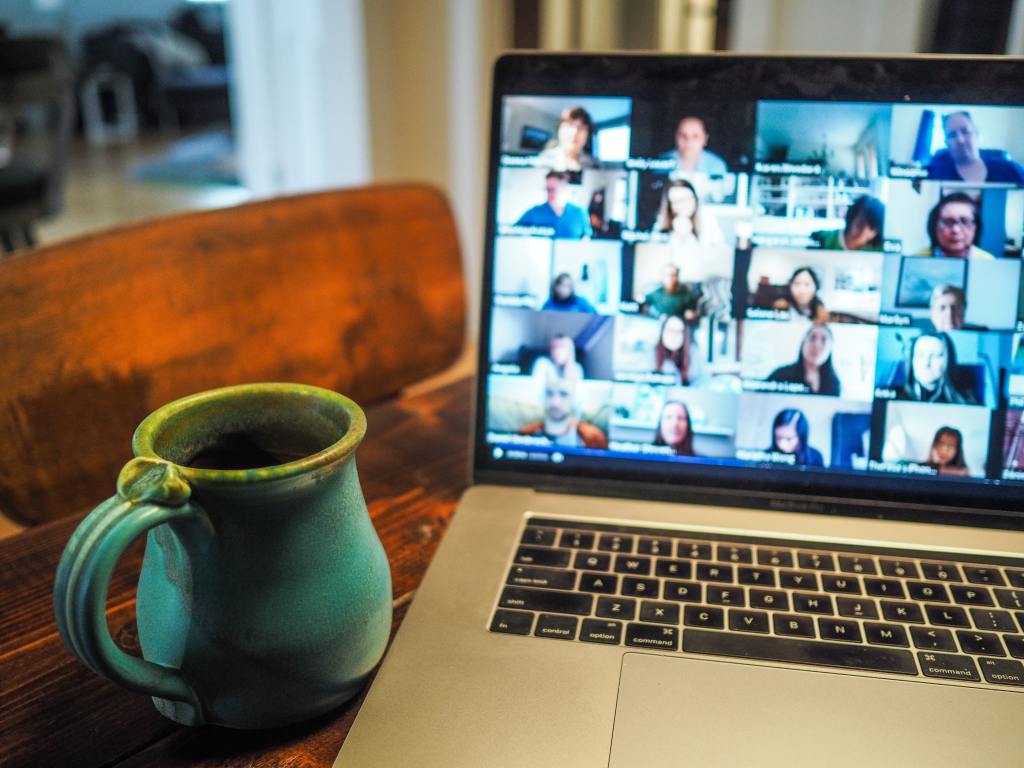
    Do you know how big your ‘self-view’ video is on Zoom when someone else is sharing content? It’s pretty small, right? In fact, on my 27” monitor, when Zoom is fullscreen and someone is sharing content, every person’s video is about 1.5” x 1” (4cm x 2.5cm).

    Do you know how big the content is? On my monitor, it’s 16” x 10”. That means that you could fit about 100 people’s videos into the size of the content. Are we really saying that when someone is presenting, everyone else’s input is only worth about 1/100th of the value? No wonder people don’t bother contributing or turning their video on; the app is telling them they are not as valuable or worthy as whatever is being shared.

    This was thrown into sharp focus for me recently when I prepared for, and then delivered, an in-person workshop. The team and I spent lots of time crafting and refining slides in preparation for the event to drive the agenda and content. But when we started working together in person at the event, the slides faded into insignificance compared to the actual conversations that took place, and the space I was sharing with other human beings. Suddenly, the slide content was a mere backdrop, not a foreground, and the interactions and individuals took centre-stage. The engagement from participants was absolute, the interactions were insightful and fun, and the outcomes were undoubtedly better.

    When we are in person, the people are the most important thing.

    My personal and professional purpose is to liberate the greatness in others. I believe that humans are inherently brilliant, and if we can only find ways to help each other to switch off their censors and unleash their genius, we’ll all fly. And here was an event where, what I’d prepped, may have been in the way of liberating greatness. This event was a humbling reminder of what I instinctively knew anyway; that when we are in person, the people are the most important thing.

    There’s a building consensus that online, or e-learning, wasn’t successful for children during the pandemic. Whilst schools are all back in classrooms now, we haven’t yet applied some of this understanding to the corporate world. I’m certainly not advocating for getting everyone back into offices – in fact, I think most of the time, most of the work we do can be done from anywhere. When we are expecting to learn, collaborate, and workshop ideas through however, then prioritising the human attendees’ experience must be the best way.

    I make a distinction between just being ‘in-person’ and prioritising attendees, because I think we can do so much more through our current media of choice (Zoom or MS Teams or a.n.other) to recognise that we’re sharing the time and space together as ingenuous, brave, collaborative, thought-provoking human beings.

    I’ve been on two, online, two-day short courses recently. One course used only three slides, temporarily, over the entire duration of the course and it changed my life for the better. One had nearly 400 slides onscreen the whole time over two days and made me wish I’d made better life choices.

    I don’t believe this is all our fault. My hypothesis is that attendees on calls are acting in alignment with what the apps are telling them – that they not as valuable as the ‘content’ being shared. And, with this self-fulfilling prophecy, engagement declines, thinking stops, cameras go off, mics go on mute, and we’re reduced to a quiet box in the corner, overshadowed by what, visually, we’re being told is important – i.e., not us.

    We must reclaim the human face of meetingsespecially when we’re online. We must endeavour to think about the experiences of the attendees, show them their contribution matters, and value their input and creativity as human beings. I, for one, will hack-and-slash the number of slides I ever choose to use again on screen and stop sharing them as soon as I can, if it’s required at all. I encourage you to do the same. If we don’t, we risk losing the insights and inputs from the attendees that can sustain and save our organisations from irrelevance.

  • Is there a Place for Seasonality at Work?

    Is there a Place for Seasonality at Work?

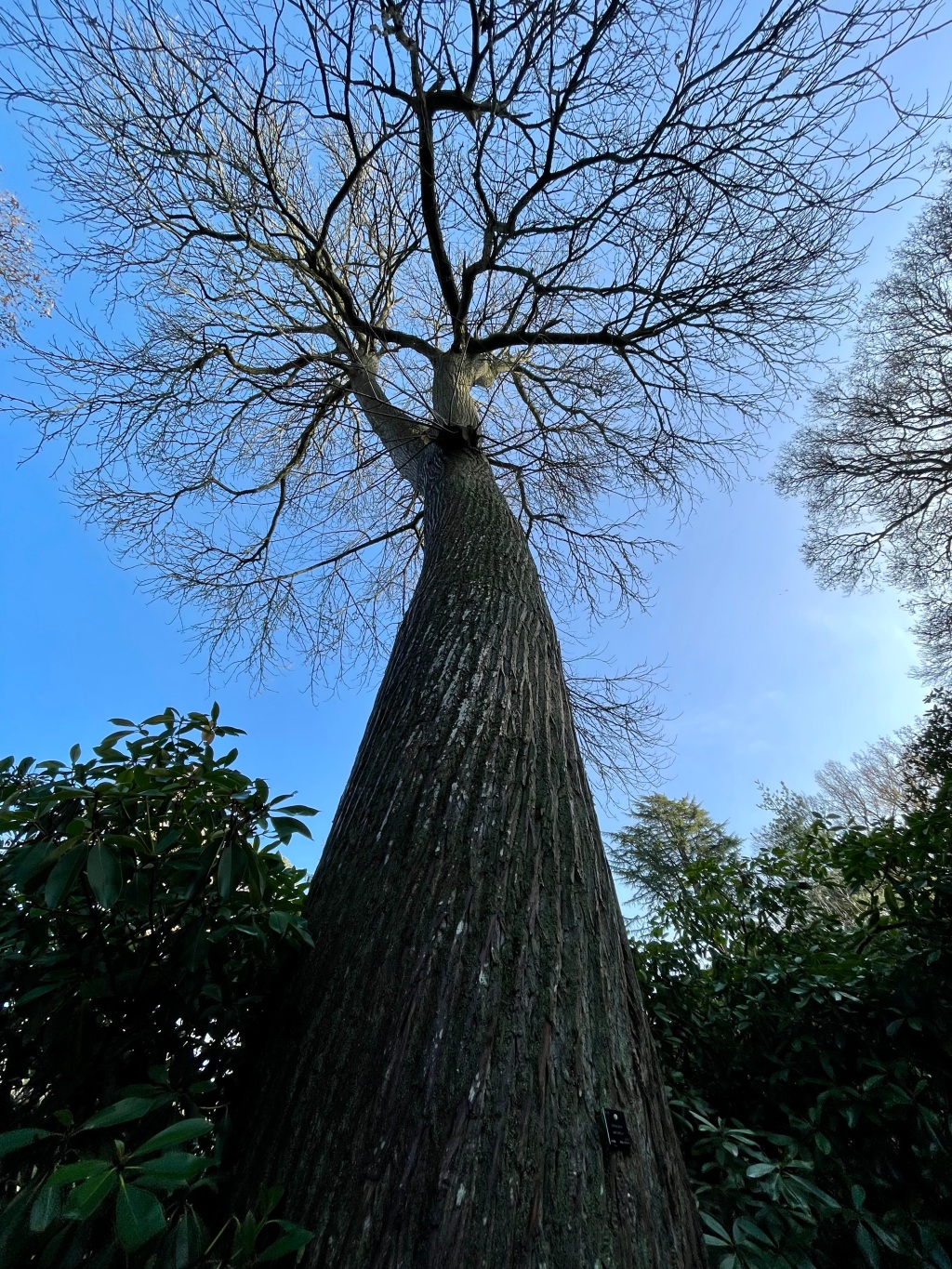
    One of my favourite places to walk is Westonbirt Arboretum near our home. It’s a great way to get back to nature and clear my head whilst supporting conservation work. On my most recent visit, I was marvelling at the structures of the trees now that all the leaves have fallen. These marvellous, decades-old organisms are saving all their energy and growth for spring: fresh buds, flowers, leaves, fruit. And it got me wondering if nature can teach us something about this time of year away from the pressures of ‘new year’s resolutions’ and towards embracing seasonality in our working lives?

    From the first of January, the start of the new calendar year, we’re often encouraged to set new goals and resolutions, and yet it’s a very arbitrary date. If we look to the rest of the natural world, it’s not starting afresh – it is midwinter! Plants are saving energy for fresh buds; animals are hibernating and hunkering down to be ready for spring; and here we are ‘getting after it’, ‘living our best life’, making radical changes…then not sticking with it, getting ill, and burning out. It doesn’t make much sense, it doesn’t appear to be very sustainable, and yet LinkedIn is full of people ‘bringing it on’ and ‘owning 2023’.

    We are connected to nature too – being human beings.

    Yes, reflect on the lessons of the previous season, nourish yourself with wholesome food, more knowledge, and enjoy movement; clear out unnecessary clutter and excesses of the past, but also be gentle, warm, kind and compassionate to yourself too. And when the first buds of new ideas and new goals arise, they will do so with greater clarity and fresh energy too.

    This is an invitation to not feel as great a pressure to set all those big goals and get started on everything now. Listen to yourself and to the natural world and respond appropriately. Reflect on what’s worked, what hasn’t; think about what you want to try out; maybe even explore a couple of ideas and experiments but consider that there may be a genuinely more invigorating time for renewal later.

    I am not saying do not do anything now.

    I know that life continues, that business thrives, that organisations endure. I’m merely advocating for observing more seasonality in our work and life – to acknowledge that there is ebb and flow, rather than being constantly ‘on’. For when we are ‘on’ 24/7, we run down to nothing and have nothing wonderful left to give the world. And I know that each and every person does have something extraordinary to offer.

    Personally, I’ve set goals for the next quarter and have a vision for the longer-term, but I’m not worrying about new year’s resolutions.

    And when you are ready to make the connections between those big, far-away goals and the experimental actions you want to start with today, then check out my Outcomes Tree idea. It’s an agile, responsive, and natural way to live in alignment with your purpose, bring value to your work, and change outcomes for the better.

  • The most stunning leadership statement I heard this year 

    The most stunning leadership statement I heard this year 

    Leadership is hard. In any organisation, at any level, being a leader requires clarity, calm and consideration. It requires people to paint such a compelling picture of a possible future that it seems like it could be a reality today. So much of the role of leaders is based on how they speak – and whether those words match their actions.

    I was wowed when I heard this statement from a leader’s opening remarks earlier this year. Rodrigo leads part of a large multi-national financial services provider. His words and actions impact work that serves millions of customers. He leads quarterly planning events that have thousands of attendees, and during his opening address, he said something that will stay with me forever:

    Your children know my name and I’ll have never met them. Your team members’ children know your name. What do you want them to say about you?”

    This was such an ingeniously human way of describing the impact leaders have, not just in the workplace, but in our lives more broadly. He knew that, whilst he won’t ever meet many of his team members’ children, they have probably heard his name at home. And he wants his people to talk about him positively to their children. By extension, he was making an extraordinary invitation to consider the impact his leaders have on their respective team members.  

    We can all think of leaders and managers we have talked about with disdain at home – to loved ones, friends, family (and children pick up on everything!). Those people close to us will have formed views and opinions of that leader and, potentially, by extension, that organisation. And because these people love us and want what’s best for us, their views will be strong-held based on what they hear. So, this wonderful statement was to ask us to consider how we’d like to be talked about when we’re not there. Do we want to be the leader that people are stressed and upset about and worry about interacting with, keeping people awake on a Sunday night; or do we want to be the leader that enthuses people to speak well about our organisation at home, to look forward to working with them, to bringing their best selves to work with us?

    As my coaching supervisor says to me, ‘how we do anything is how we do everything’and here’s a perfect example of how this can play out: our lives are complex webs of social interactions where each part of the system has an impact on the other.

    What kind of impact do you want to have on others?