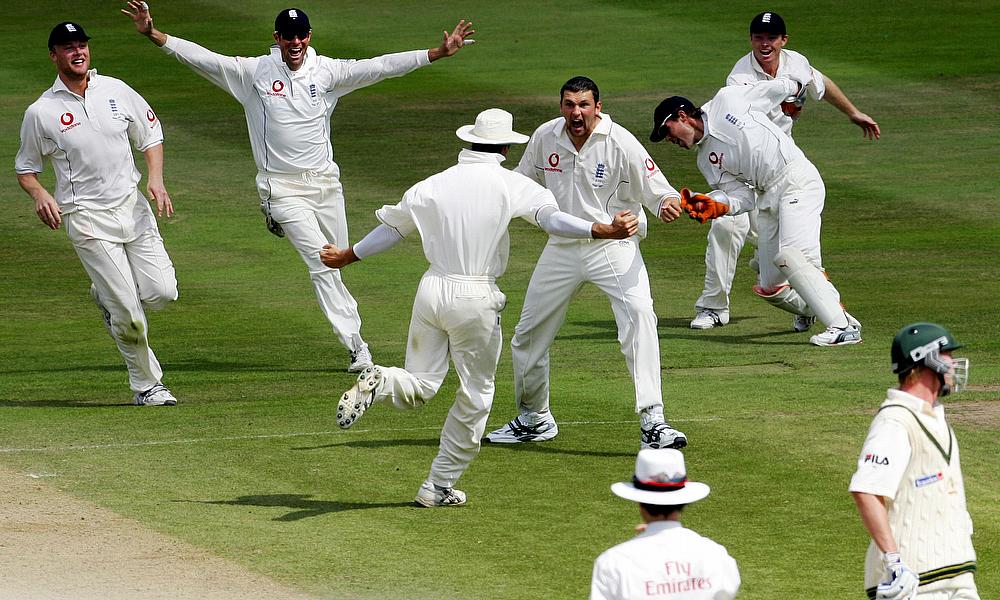
With the Ashes about to begin again, this time in Australia, I’ve found myself thinking about boundaries. Not just the rope around the edge of the cricket field, but the kind we’re encouraged to set in our personal and working lives.
I loved the 2005 Ashes. I was utterly absorbed, listening to Test Match Special, watching as many deliveries as I could as England snatched that unforgettable victory from Australia. I remember one of my friends sharing his love for cricket by saying “It’s such an amazing game: you can play for five days and come out with a draw”.
We’re encouraged, rightly, for the most part, to set clear personal boundaries which are healthy. Gen Z in particular is frequently praised for being better than previous generations at setting and holding them. When we understand what is acceptable to us and what is not, we create the conditions to flourish.
Most sports reflect the same logic. Boundaries define the limits of play and help maintain control. Step outside the line in rugby, football, netball, basketball, or hockey, and play stops. The boundary represents the edge, or the point at which play halts and the boundary-crosser loses control.
Cricket inverts this logic. 🏏
In cricket, breaking the boundary is celebrated. If the ball reaches it along the ground, the batting side earns four runs; if it sails clean over, they earn six.
The boundary isn’t a barrier…it’s a marker of success!
Where most sports insist you stay within the lines to keep playing, cricket rewards you for going beyond them.
A different kind of limit
That swap feels worth exploring. It suggests that not all boundaries exist to constrain us. Some are meant to be crossed. Some show us what success looks like.
Think of hierarchical boundaries, policy boundaries, cultural boundaries, or the quiet habitual boundaries we rarely question. Some are essential and protective. Others are flexible. Some are assumptions hiding as rules. And some, perhaps, sit far too close to us, defining a comfort zone we’ve mistaken for a limit.
Cricket illustrates this beautifully. When a ball is clearly racing away towards the rope, commentators often say the fielders shouldn’t bother chasing. It’s gone too far. The runs are already earned. The boundary, in that moment, is not an obstacle but a signal of achievement.
The long game
I’m not advocating a Bazball approach to life – swinging wildly in every direction in the hope of racking up runs. Like Test cricket, life usually needs a blend of patience and ambition. Sometimes we play a defensive shot. Sometimes we take the single. And sometimes we take a lovely cover drive that carries us beyond the rope.
In a Test match, the game unfolds over long periods of time, with momentum shifting subtly over hours or days. Success isn’t just about bold strikes, it’s about understanding the game’s rhythm.
So perhaps the question isn’t: Should I have boundaries?
But rather: What kind of boundary is this – and what is it for?
Useful boundaries, debatable boundaries, and the ones worth playing with
I know from experience that clear personal and professional boundaries support my wellbeing. They help me focus, recover, and make thoughtful choices.
But it’s possibly true that some boundaries deserve scrutiny.
Some are rigid and non-negotiable, some are assumptions we inherited, some mark the edges of our fears rather than our true limits.
Some are there to protect us and some might just be pointing us towards what success could look like—if we dared to push further.
A thought to take into the Series
As we settle into another Ashes series of five days, five matches, and all the drama, there remains an intriguing paradox: Cricket is played within boundaries…yet it celebrates the moments when those boundaries are crossed.
Perhaps the same is true in life? Not all lines are drawn to keep us in – sometimes they show us how far we can go.
P.S. I’ve taken a different approach to writing this blog. I did lots of rambling into a voice note and refined it with an LLM. Then I’ve polished it and put my own ‘spin’ back on it. What do you think?
“I’m always firefighting. There’s no time to think.”
I can’t remember the first time I heard this phrase, but I hear it A LOT – particularly when I’m coaching senior leaders in transformative and project leadership roles.
And whilst evocative of modern time-management (or lack thereof) has to be a better way, right? Well this got me thinking, and a confluence of three things sparked this blog:
Someone using this phrase in a coaching session…again!
Reading about systems thinking.
Watching the Apple TV+ show, Smoke.
A bit of context about each, and then the thought…
The phrase
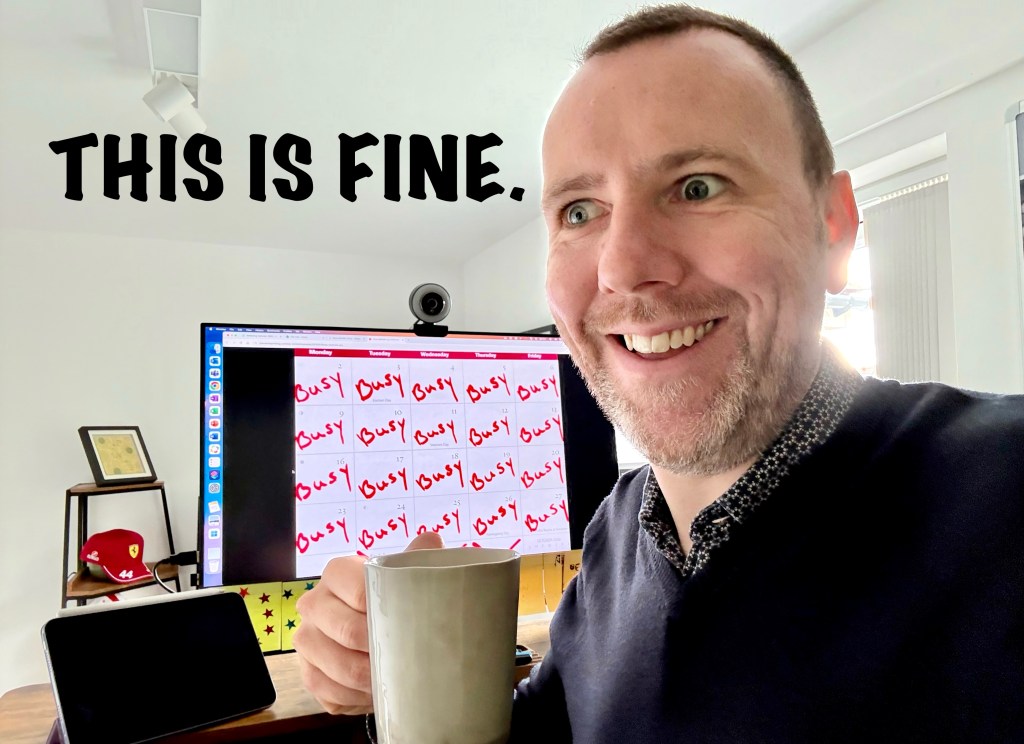
It paints a clear picture…or we can all think of the meme with the cartoon dog in the house that’s on fire saying ‘this is fine’…everything’s going a million miles per hour and we have to move from one crisis to the next, urgent to urgent to urgent – never doing the important things we promised ourselves we’d do, like strategic thinking, self-development, 1:1s with others, improving processes, etc.
Systems Thinking
This is something that I’ve dabbled with on and off for years. In the first instance, I didn’t really get it. Someone sent me a video of blobs moving around rectangles and said ‘I think you’re going to love it’…
More recently, I’ve come to understand more about systems and how interconnected everything is – that is, whatever happens may be as of a result of something else far away in the system, or whatever we do may have far reaching and unintended consequences on the wider system. And that, traditionally, when things go wrong people tend to analyse; that is, break the problem down into smaller and smaller constituent parts – e.g. an app fails and analysis tells us a line of code needs rewriting, whereas Systems thinking asks us to synthesise, or to look up at the wider systemic nudges that may cause the problem – e.g. an app fails because of management pressure to ship fast on smaller budgets.
Smoke
This is a show on Apple tv+ about a fire scene investigator partnering up with a cop to identify and catch two serial arsonists. No spoilers, but it’s far more compelling than I thought it might be to start with. The fire scene investigator character, played by Taron Egerton, often delivers talks to trainees about the chaos of fire and being prepared.
The confluence
This got me thinking, if a fire kept happening in the same place, you wouldn’t want to keep relying on the fire brigade/department to come and put it out…you’d solve the reason why the same thing kept happening…so why don’t we do this at work when people describe their entire jobs as ‘fire fighting’?
I can’t imagine a fire fighter loving having to revisit a scene time and time again if a fire keeps getting ignited there – they’d want to put some other measures in place – systemic changes – sprinklers, better equipment, arrest the arsonists, create escape plans.
This approach could apply to the highly flammable systems in the workplace because it’s not ok to perpetually expect colleagues to be fire-fighters – presumably we want them spending their time adding value and putting their hard-won skills and experiences to work rather than rushing around, meeting to meeting, putting out things that have gone wrong.
Setup Sprinklers
In the immediate term, a knowledge-work equivalent of the sprinkler system might need setting up. If a fire keeps breaking out, having something to immediately dampen it down might be a reasonable temporary solution. In our imagined knowledge-work based equivalent, maybe that’s a standing meeting, decision forum, Andon Cord, or emergency WhatsApp channel that can be triggered straight away to solve the biggest crises and challenges.
Improve Equipment and Systems
The system is broken if fires keep breaking out. The system needs fixing. In the same way that if a restaurant kept catching fire they might need some better quality ovens, in our knowledge-work environment, we need higher quality systems that avoid these fires breaking out. Maybe it’s visualising all the work that’s going on so that people can see a potential fire brewing. Maybe it’s limiting work in progress so that more work can’t be shoved into an already overloaded system. Maybe it’s building in slack, recovery, creativity time into work.
To continue the fire metaphor, sometimes a fire-break is required in order to break the spread of the chaos and put new systems in place and so it may be with our work systems. It’s not ok that colleagues describe their working days as perpetually being on fire, we have to find better systems.
Arrest the Arsonists
If you’re the fire fighter in this scenario, then I’m going to assume it’s not you lighting the fires…you keep putting them out. So who IS lighting them? Stop them. Take their jerry cans of fuel away.
If it’s people adding stuff to your plate, check out the No Repertoire from Greg McKeown; if it’s people bringing you down, stop spending time with them; if people change their mind every five minutes, perhaps introduce something like the RAPID decision-making framework and force people to take some responsibility.
Develop Escape Plans
And, if it can’t be prevented, fire breaks out – then you need an escape plan. Getting away from your desk for a minute to assess the situation, having a friend to call, taking a holiday, going for a walk all may be release valves for dealing with these situations.
There’s a reason firefighters have to have breaks and spend a lot of time training – it’s not tenable to be doing it all the time. And it isn’t for us either. We need breaks, we need training, we need recovery if we’re going to have to fight fires at work.
These are some ideas I’ve been kicking around on firefighting. What other techniques could people try to change the system and stop the arsonists?
How good at you at saying ‘no’ to the things that don’t matter?
Struggling? There’s got to be a better way.
In part it’s because we don’t often spend time working out what it is that we do want to get done. Or why those things matter to us. So what happens is, we end up saying ‘yes’ to everything because we don’t know what’s important.
My tried and tested VAPOR framework changes all of that. It puts you back in control of your goals, provides a clear way to get after them, live your life in alignment with what you believe is important, and allows you to say ‘no’ to extraneous nonsense. I use it every day to get closer to what I want to achieve and focus on the really important stuff that allows me to fill my day with the things that matter to me. In the last year, it’s allowed me to write and produce a play for the theatre (something I haven’t done since I was a student), lose more weight than I’ve done in the decade previous with yo-yo dieting, and complete a coaching and facilitation course alongside my substantive consulting job.
VAPOR stands for:
Values
Activities
Plans
Organisation
Reflection
Each part of the framework has associated activities with them and should be followed in order.
Values
What are your values? A simple question with seismic implications. And often a question we don’t ponder. Or if we do, we land on nebulous things that aren’t quite right or don’t really resonate. I’m going to offer two ways to get to your values.
Option 1: Ask a simpler question, but sit with it for a long time.
Instead of ‘what are my values?’, ask ‘what do I value?’. A really subtle shift, but is simpler to sit with.
Give yourself an hour and that question. Write down every response you can think of for about 30 minutes: I value laughter, I value fun, I value my family, I value subversiveness, I value betterness (it doesn’t matter if you make words up). Then read each one out loud and see what you notice. If it feels right, keep it; if there’s something not quite right, ditch it; if there’s duplication or themes, theme them.
You should end up with about 4-6 core values.
or
Option 2: Revisit your life so far, looking for clues.
This technique is about looking for pivotal moments in your life. Think back, or better still, find a friend who’ll listen to you for a bit and ask them to help you notice the moments.
Go through the story of your life, from childhood, and notice moments of change – where you used to do things one way, and then you found another way; or where change happened to you and you had to learn something else. Behind these moments of change resonates values. The things that are inherently important to us provoke us to act differently in these moments, they force us to focus on what really matters to us. They could be when you decided to take up a particular hobby or pastime, when you stuck with something at a moment you could have given up, when you discovered you were a party animal, or when you got home and realised nothing would ever be the same.
These moments of your story pull out the things that matter to you.
As with option 1, sit with that list of things: ‘tenacity seems to be important to me; I seem to tbe the kind of person who values helping others’ and keep the ones that resonate, and park the ones that don’t any more. Maybe those ones served you really well at that moment of change, but might not be as important for you right now.
Again, theme them so that you end up with 4-6 core values.
Shortcut
I’m going to suggest a few things that I value which you might too:
Craft – getting better at skills that matter to you – they could be work or personal.
Connection – connecting to yourself, your partner, family, friends, and society.
Health – your physical, mental and financial health.
Creativity – making something that wasn’t there before.
Activities
Identifying a regular activity you do around each of your values.
I deliberately haven’t used the term ‘habit’ here, because I don’t enjoy the pressure that comes with that term. I can valuemy physical health, but it doesn’t mean I have to go for a run every day. However, if I do have a set of regular activities, like going to the gym, taking classes, going for a long walk or a jog, and staying under a certain number of calories for the week, then I can say I value my health.
For each of your values, think about some things you can do to show to yourself that you take this value seriously.
They should be easy enough to be able to fit into most days, but difficult enough that they require some effort. The effort is important in terms of the story we tell ourselves that ‘doing this means I take it seriously’.
Some examples for my values:
For my craft, I regularly listen to podcasts, read a book instead of picking up my phone, and use the VAPOR planning framework.
For connection, I go to the pub on a Friday night with my wife and we chat about the week, and I donate regularly to charity.
For health, I take part in exercise activities, write a journal, and take a weekend walk in nature.
For creativity, I play the piano and do some automatic writing a couple of times per week.
Plans
Establishing what you plan to achieve according to your values.
No that you have the foundations of living a life in alignment with your values, you can set to the task of planning out what you want to achieve in accordance with your values. This will give you a clear indication of what things you want to be better or different over various time horizons, and will also give you the ammunition to say ‘no’ when other things come up.
I suggest planning at the quarterly, weekly, and daily scale. And sometimes annual if helpful for you. But mostly, we can make decent headway on the things we want to achieve in a quarter.
For each value, plan to achieve one thing in the next quarter. Depending how many values you have identified, you may decide that in some quarters you don’t have any activities for that value – and that’s ok if it’s an intentional gap. For me, for example, if I’ve had a particularly creative couple of quarters, I might deliberately decide to take a break to allow myself to recharge. I still value creativity, and will still keep up the regular activities, but may choose not to have a specific plan on the go.
So, for example, you may decide that for your craft, you plan to acquire a new qualification in the next quarter. Or for connection, you might plan to see friends or family that you haven’t caught up with for a while. For your financial health, you may plan to finally set up that budget you’ve been meaning to do forever. There’s no fancy format, just write down the thing you want to be better or different in the next three months against the value.
If you want to get a bit more advanced or ambitious in your planning, you can set out levels of accomplishment – from commitment (you definitely want this), to challenge (it’ll be tough, but possible), to crushing-it (if everything works in your favour, perhaps this will happen).
The joy of planning in this way, is you’ve always got a good answer if someone asks to add something to your plate. If the project is in alignment with your values and you haven’t got anything on this quarter, maybe you say ‘yes’. If it’s in alignment with your values but you’ve already got something on this quarter, you can say you’d love to do it, but you’re already planning to achieve X, Y, and Z this quarter – perhaps you could consider it when you do your next quarterly plan. If it’s not in alignment with your values and you already know what you want to achieve, it’s much easier to say ‘no’ because you already know what and why you are doing and how you intend to spend your time: ‘I’m already planning to achieve A, B, and C this quarter, so I’m not going to be able to plan in your project’.
Having the regular planning rhythm and the intention to achieve things in alignment with your values makes conversations about adding more in so much more easy. It also helps keep you happier and more fulfilled, because you’re always working towards something that matters to you.
Organisation
The organisational steps to keep momentum with your plan.
OK, so you now have your quarterly plan and you need to get organised to make it happen. The next step is to look at this quarterly plan every week. I suggest doing this on a Friday. Each Friday, look at the quarterly plan and write a plan for the week that will get you a step closer to each goal. Maybe this week you want to read a chapter of a particular study book, practice a new technique, run 1km further.
Write down your weekly plan.
Keep it realistic – there’s no need to overstretch yourself. If in doubt, cut the plan down to about 60% of what you first think you can do in a week. Better to achieve that than to be left feeling like you haven’t met your goals. If you have extra time you want to fill, at least now you’ve got a quarterly plan to go to and take action on that.
Then, every morning, check your weekly plan and pick out the things you plan to do today. Sometimes this will be decided in advance for you (e.g. a class is always on Wednesday), sometimes you have autonomy to decide. The key is to be intentional about your plans and your time. If you don’t plan how you want to use your time, someone else sure will – whether that’s your boss, Slack chat, or TikTok’s algorithm.
How do you write all these plans up?
Personally, I use a Trello board. I have a column (and associated colour label) for values. Then a column for regular activities. The next column has the quarterly plans, a weekly plan backlog column, then a doing and done column for each day. Cards can be colour coded with the values, so I can see at a glance that I’m living a balanced life, and the quarterly plans have checklists to tick off various points along a journey, such as weight-loss markers, or number of words written for a book.
Reflections
At the end of each week and each quarter, take time to reflect on what you’ve achieved.
It’s a moment of celebration and of learning. Perhaps you crushed some goals and missed targets on others. Maybe you let your regular activities slip or your plans got waylaid by a new project or social crisis.
What matters is you take time to reflect, learn and take lessons into the next quarter. If you’re always overcommitting, only take one or two quarterly goals into the next quarter, and cut the weekly and daily plans to about 60%. If you find that you’re super creative on Friday mornings, then plan to do your creative work then.
I hope the VAPOR planning framework is useful for you. It’s been fantastic to help me achieve more of the things I want to achieve, live a life in alignment with my values, and be able to say no to the things that don’t fit.
I believe strongly in ‘betterness’ (my made-up word from earlier) and so, I use Dieter Rams’ famous quote to inspire this lifestyle: “Less, but better.”
Less, but better
Dieter Rams
Good luck using it, and let me know how you get on.




 Sam Grayston