Tag: simplicity

  • Stop the Arsonists: Better Leadership for Burning Workplaces

    Stop the Arsonists: Better Leadership for Burning Workplaces

    “I’m always firefighting. There’s no time to think.”

    I can’t remember the first time I heard this phrase, but I hear it A LOT – particularly when I’m coaching senior leaders in transformative and project leadership roles.

    And whilst evocative of modern time-management (or lack thereof) has to be a better way, right? Well this got me thinking, and a confluence of three things sparked this blog:

    1. Someone using this phrase in a coaching session…again!
    2. Reading about systems thinking.
    3. Watching the Apple TV+ show, Smoke.

    A bit of context about each, and then the thought…

    The phrase

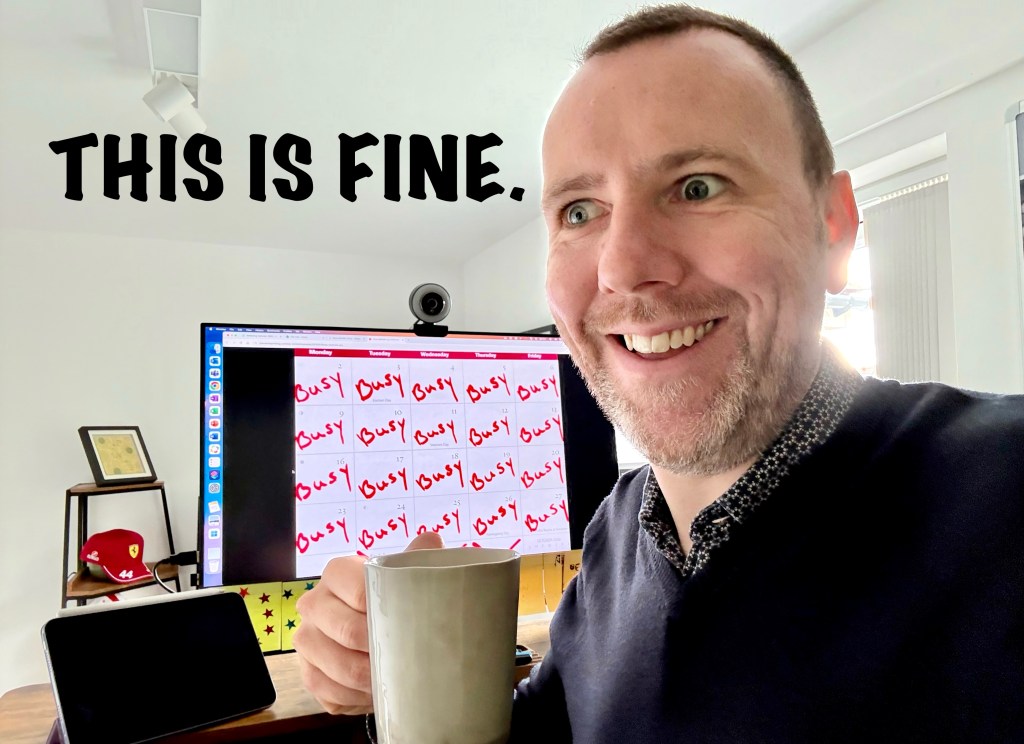
    It paints a clear picture…or we can all think of the meme with the cartoon dog in the house that’s on fire saying ‘this is fine’…everything’s going a million miles per hour and we have to move from one crisis to the next, urgent to urgent to urgent – never doing the important things we promised ourselves we’d do, like strategic thinking, self-development, 1:1s with others, improving processes, etc.

    Systems Thinking

    This is something that I’ve dabbled with on and off for years. In the first instance, I didn’t really get it. Someone sent me a video of blobs moving around rectangles and said ‘I think you’re going to love it’…

    More recently, I’ve come to understand more about systems and how interconnected everything is – that is, whatever happens may be as of a result of something else far away in the system, or whatever we do may have far reaching and unintended consequences on the wider system. And that, traditionally, when things go wrong people tend to analyse; that is, break the problem down into smaller and smaller constituent parts – e.g. an app fails and analysis tells us a line of code needs rewriting, whereas Systems thinking asks us to synthesise, or to look up at the wider systemic nudges that may cause the problem – e.g. an app fails because of management pressure to ship fast on smaller budgets.

    Smoke

    This is a show on Apple tv+ about a fire scene investigator partnering up with a cop to identify and catch two serial arsonists. No spoilers, but it’s far more compelling than I thought it might be to start with. The fire scene investigator character, played by Taron Egerton, often delivers talks to trainees about the chaos of fire and being prepared.


    The confluence

    This got me thinking, if a fire kept happening in the same place, you wouldn’t want to keep relying on the fire brigade/department to come and put it out…you’d solve the reason why the same thing kept happening…so why don’t we do this at work when people describe their entire jobs as ‘fire fighting’?

    I can’t imagine a fire fighter loving having to revisit a scene time and time again if a fire keeps getting ignited there – they’d want to put some other measures in place – systemic changes – sprinklers, better equipment, arrest the arsonists, create escape plans.

    This approach could apply to the highly flammable systems in the workplace because it’s not ok to perpetually expect colleagues to be fire-fighters – presumably we want them spending their time adding value and putting their hard-won skills and experiences to work rather than rushing around, meeting to meeting, putting out things that have gone wrong.

    Setup Sprinklers

    In the immediate term, a knowledge-work equivalent of the sprinkler system might need setting up. If a fire keeps breaking out, having something to immediately dampen it down might be a reasonable temporary solution. In our imagined knowledge-work based equivalent, maybe that’s a standing meeting, decision forum, Andon Cord, or emergency WhatsApp channel that can be triggered straight away to solve the biggest crises and challenges.

    Improve Equipment and Systems

    The system is broken if fires keep breaking out. The system needs fixing. In the same way that if a restaurant kept catching fire they might need some better quality ovens, in our knowledge-work environment, we need higher quality systems that avoid these fires breaking out. Maybe it’s visualising all the work that’s going on so that people can see a potential fire brewing. Maybe it’s limiting work in progress so that more work can’t be shoved into an already overloaded system. Maybe it’s building in slack, recovery, creativity time into work.

    To continue the fire metaphor, sometimes a fire-break is required in order to break the spread of the chaos and put new systems in place and so it may be with our work systems. It’s not ok that colleagues describe their working days as perpetually being on fire, we have to find better systems.

    Arrest the Arsonists

    If you’re the fire fighter in this scenario, then I’m going to assume it’s not you lighting the fires…you keep putting them out. So who IS lighting them? Stop them. Take their jerry cans of fuel away.

    If it’s people adding stuff to your plate, check out the No Repertoire from Greg McKeown; if it’s people bringing you down, stop spending time with them; if people change their mind every five minutes, perhaps introduce something like the RAPID decision-making framework and force people to take some responsibility.

    Develop Escape Plans

    And, if it can’t be prevented, fire breaks out – then you need an escape plan. Getting away from your desk for a minute to assess the situation, having a friend to call, taking a holiday, going for a walk all may be release valves for dealing with these situations.

    There’s a reason firefighters have to have breaks and spend a lot of time training – it’s not tenable to be doing it all the time. And it isn’t for us either. We need breaks, we need training, we need recovery if we’re going to have to fight fires at work.

    These are some ideas I’ve been kicking around on firefighting. What other techniques could people try to change the system and stop the arsonists?


  • Back to nature and back to sketching

    Back to nature and back to sketching

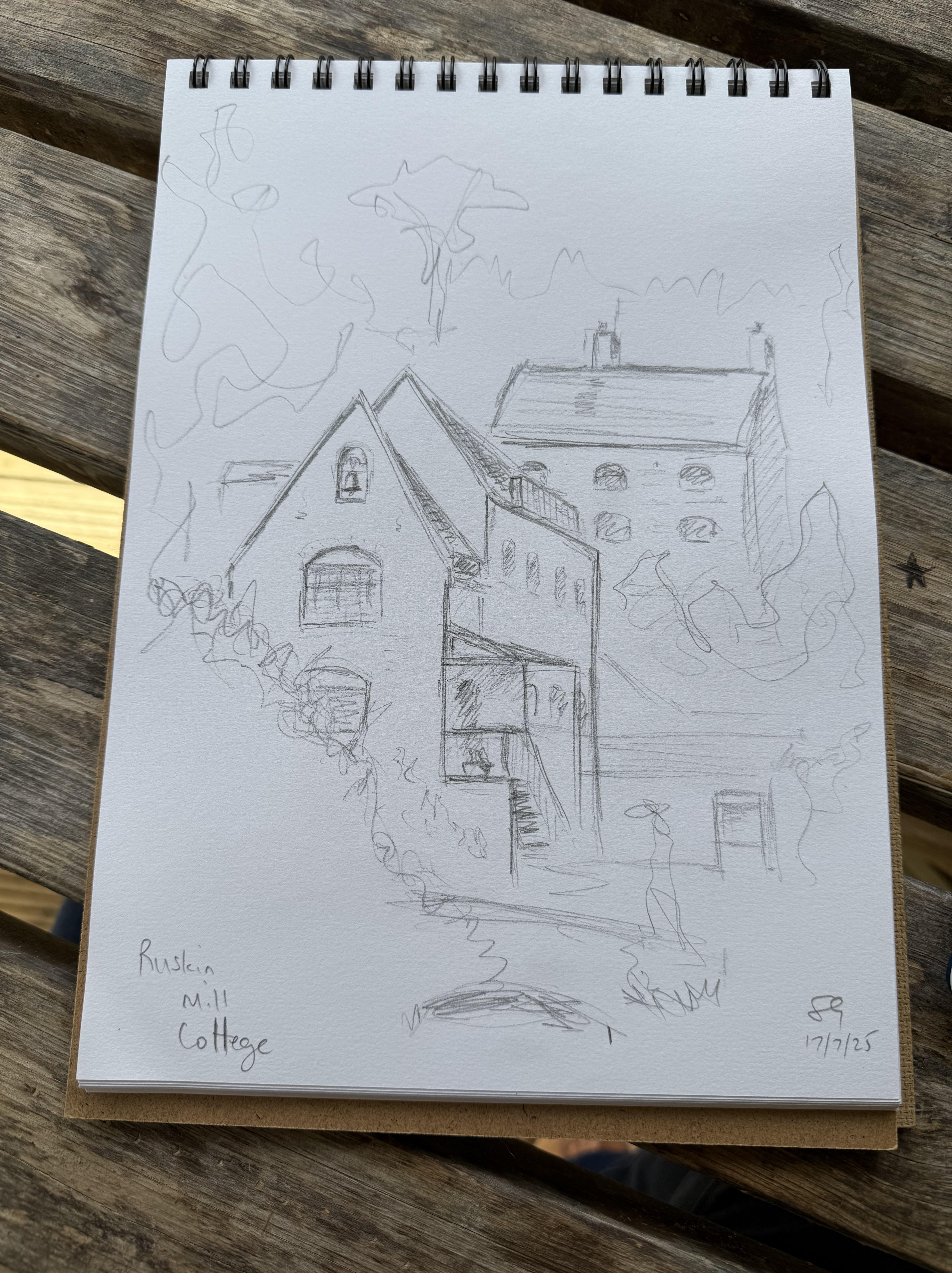
    Thought I’d take a couple of days off to wander round in nature and do a little sketching.

  • Sam vs. the LLM: A Coaching Scorecard

    Sam vs. the LLM: A Coaching Scorecard

    In the last 24 hours, I’ve discovered both a validating limitation and a powerful liberating use of LLMs. It’s not all good or all bad—sometimes it’s both. I’d like to share these stories with you.

    Coaching: the human advantage

    One of my clients had been using a popular LLM to do a bit of self-coaching to work out what he wanted to do next. He’d become a bit fed up with his current role after a couple of years, and was looking for change. But because he’d become part of the furntiure, he couldn’t really remember what fired him up. So he went looking for answers through an LLM. Interestingly, the LLM explored what he didn’t like about roles in order to build a profile of what he should be looking for. A fine enough approach – and one I might have taken myself as a coach. But what he came out with (and what so often comes out of LLMs) is a very generic sounding list of ‘you sound like you might find project management satisfying’.

    When I was coaching him through this, and listening deeply, I noticed that actually there was an underlying lack of feeling being expressed. He would talk about his out-of-work sporting endeavours with a smile on his face, energy in his body language, and spark in his eyes. He would talk about work as ‘quite enjoyable’, or ‘quite satisfying’ with that very rational list of things we all do to justify why something is ‘fine’ or ‘ok’. The LLM couldn’t experience the energy, so came up with something generic.

    As two humans interacting, we tapped into the energy and started to map out a compelling map for his next decade.

    Sam 1 : 0 LLM

    Refining an OKR: the LLM advantage

    The second example involves using an LLM to refine an OKR for a piece of new work. OKR stands for Objective and Key Result. I often frame these simply as:

    Objective: what do you want to be better or different?

    Key Results: what would be the result of that?

    I had some alright starter thoughts and context which I put into the LLM. Although this time I’d been reminded that, of course, LLMs don’t ‘run out’ of ideas. I’d assumed that I would put a prompt in and it would generate the single ‘best’ answer. But it could write OKRs all day if I wanted it to.

    So I asked it to come up with 10 versions of the OKR that I’d written. And without breaking a sweat – because it doesn’t sweat – but it probably is environmentally damaging – sorry – it came up with ten versions.

    I could then pick the best Objective and Key Results for the work based on my understanding.

    Spoiler – they weren’t all from one version, neither were they from the first version.

    Next time you want to come up with an improvement using an LLM – ask for loads of them and pick the best ones.

    Sam 1 : 1 LLM

    A fair match, played to our strengths.

    PS – I wrote this myself, not with an LLM. Although I did ask the LLM to come up with 20 titles. This is the one I chose.

    PPS – I have permission from the coaching client to share his story.

  • 25 Lists for a Meaningful 2025: Reflection and Planning

    25 Lists for a Meaningful 2025: Reflection and Planning

    The start of a new year is the perfect time to think ahead. While I’m not a big believer in New Year’s resolutions, I do find value in using lists and prompts to set out what matters to me. Each year since 2021, I create a series of lists that help me prioritise, reflect, and plan. Every week or two, I revisit these lists to check my progress and make adjustments.

    Here are the 25 lists I’m compiling for 2025:

    Self-Reflection and Values

    1. Who am I?

    This grounding question is inspired by a coaching session with the brilliant James Victore. Set aside an hour, ask yourself “Who am I?” and jot down everything that comes to mind. Then, go back and reflect on each statement—keep what feels true, and let go of the rest.

    2. Things I Value

    As part of my VAPOR planning framework (Values, Activities, Plans, Organisation, Reflection), I identify my core values and the daily activities that help me live them out.

    3. Sayings I Live By

    A curated collection of quotes, mantras, and sayings that inspire and resonate with me—featuring Dieter Rams, Miles Davis, Tolkien, Maya Angelou, Nancy Kline, and, yes, even Ted Lasso.


    Looking Forward to 2025 and Beyond

    4. What I Want to Happen in 2025

    Rather than resolutions that I ‘resolve’ to do, this is a list of aspirations, goals, and ideas for the year—a mix of the intentional and the hopeful.

    5. What I Want to Leave in 2024

    Life isn’t just about adding; it’s also about subtracting. This list captures habits, behaviours, or practices I’d like to leave behind—like people-pleasing or apologising unnecessarily.

    6. Things I’d Like to Achieve in This Decade

    Turning 40 has inspired me to think long-term—whether it’s writing a book or becoming conversational in Italian.


    Fostering Creativity and Ideas

    7. Fragile Ideas Worthy of Reverence

    In Jony Ive’s commencement speech for the California College of Arts, he talks about the reverence for ideas his design lecturer inspired in him. Ive talks about how fragile and fleeting ideas are and how quickly they can dissipate if not treated with kindness and reverence. Whether it’s a good idea or not, appreciating that the idea itself is worthy of some reverence and exploration before being implemented or dismissed. 

    8. Moments of Resonance

    A new addition for 2025, this list tracks moments that deeply resonate with me—from personal experiences to art or design. I then reflect on why they resonate and how to invite more of that into my life. Mine’s a mish-mash of minimalism and mess, of modern and old, and I’m looking forward to working on it. 

    9. Creative Things to Do

    Creativity is one of my core values, and this list ensures I prioritise it by giving me a go-to bank of creative ideas.

    10. Ideas from the Web

    A place to store intriguing ideas, apps, shortcuts, automations, etc, I encounter online that I’d like to try out.


    Daily Practices and Tools for Growth

    11. ‘Got a Minute’ List

    For those small pockets of time when it’s tempting to scroll mindlessly, this list offers alternatives—like stretching, reading a page of a book, or reconnecting with an old friend.

    12. What I’m Grateful For

    While I practise daily gratitude, this list captures the big-ticket items that anchor my sense of abundance.

    13. What Have I Learned?

    From small insights to significant lessons, this list ensures I don’t forget what I’ve gained.

    14. Things I Do Better Than Most

    For those tough days, this list reminds me of the unique skills and talents others value in me.


    Relationships and Social Capital

    15. Social Capital

    A reflection on the relationships I want to nourish and the people I want to stay connected with.

    16. Personal Board of Directors

    This list includes trusted individuals (real, fictional, or idealised) who I can advise me in my best interest.

    17. People I Should Know

    A guide to intentional networking and building meaningful relationships.


    Achievements and Memories

    18. Biggest Accomplishments

    A go-to reminder for when I doubt my progress, this list celebrates what I’ve achieved so far.

    19. Career Bucket List

    From keynote speaking to publishing a book, this list captures the career milestones I aspire to reach.

    20. Shows I’ve Been Involved With

    A nostalgic look at the plays and performances I’ve been part of—it’s quite a list now!


    Gratitude

    21. Gifts Given

    It’s rewarding to remember the gifts I’ve shared and the experiences I’ve created for others.

    22. Gifts Received

    Practising gratitude by recalling the kindness and thoughtfulness I’ve been lucky enough to receive.

    23. Nice Things I’ve Got for Myself

    Acknowledging the moments I’ve treated myself and appreciating my ability to indulge occasionally.


    Practical and Aspirational

    24. Places I’d Like to Go

    There are so many places to explore—this list keeps my wanderlust alive.

    25. Things for a Quiet Day

    When an unexpected quiet day arrives, this list ensures it doesn’t slip away unnoticed.


    Personally, I keep these lists on Notion, adding comments, pictures, and tags to stay organised. Every couple of weeks, I review them, check my progress, and make small tweaks to my plans for the fortnight ahead.

    I hope these lists inspire you as they’ve inspired me. They’ve proven far more effective than New Year’s resolutions!

    What’s on your list for 2025?

    This revised structure starts with introspection and flows naturally towards actionable and aspirational items. Does this feel more cohesive?

  • Does your canopy of work make sense?

    Does your canopy of work make sense?

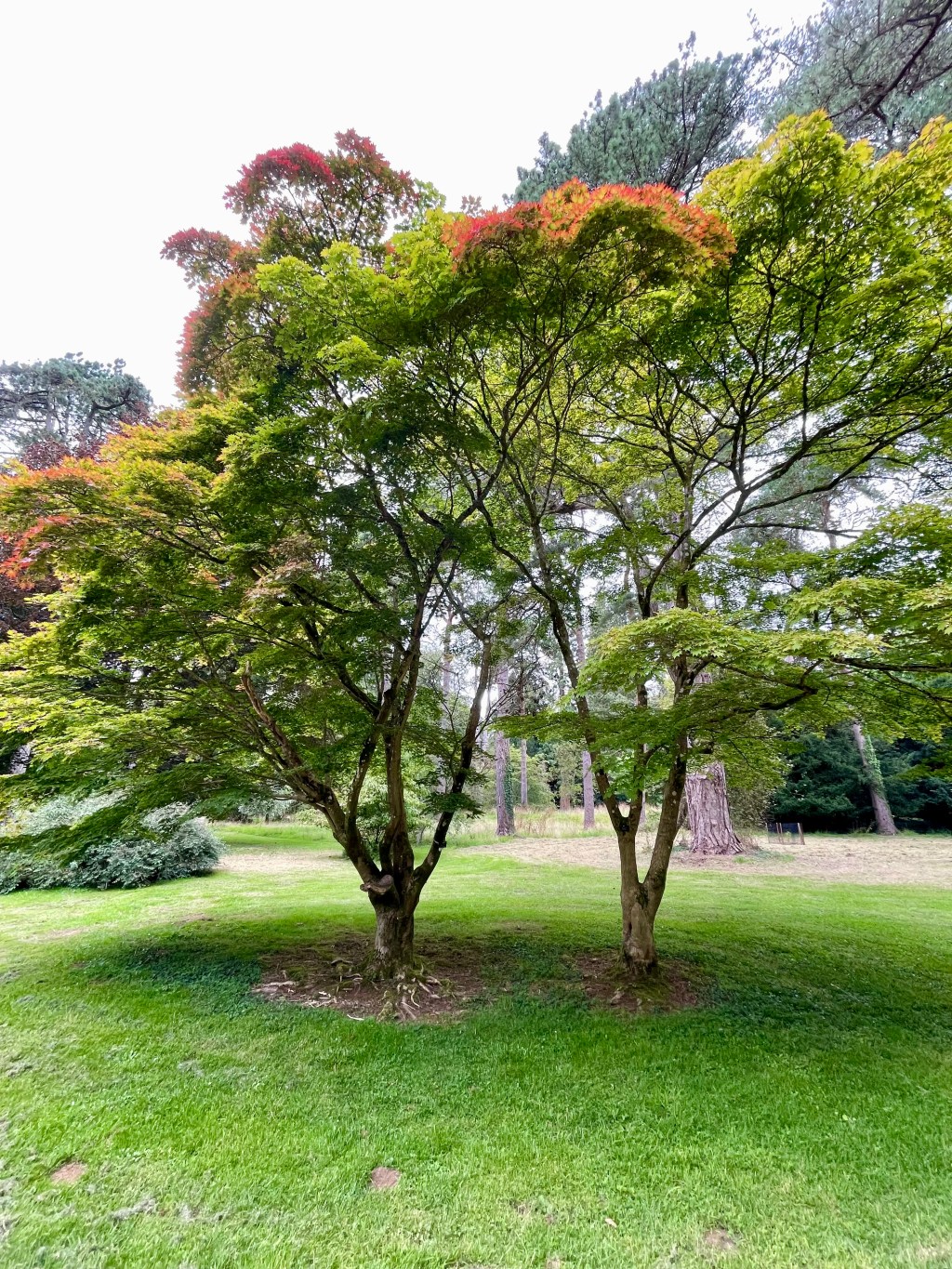
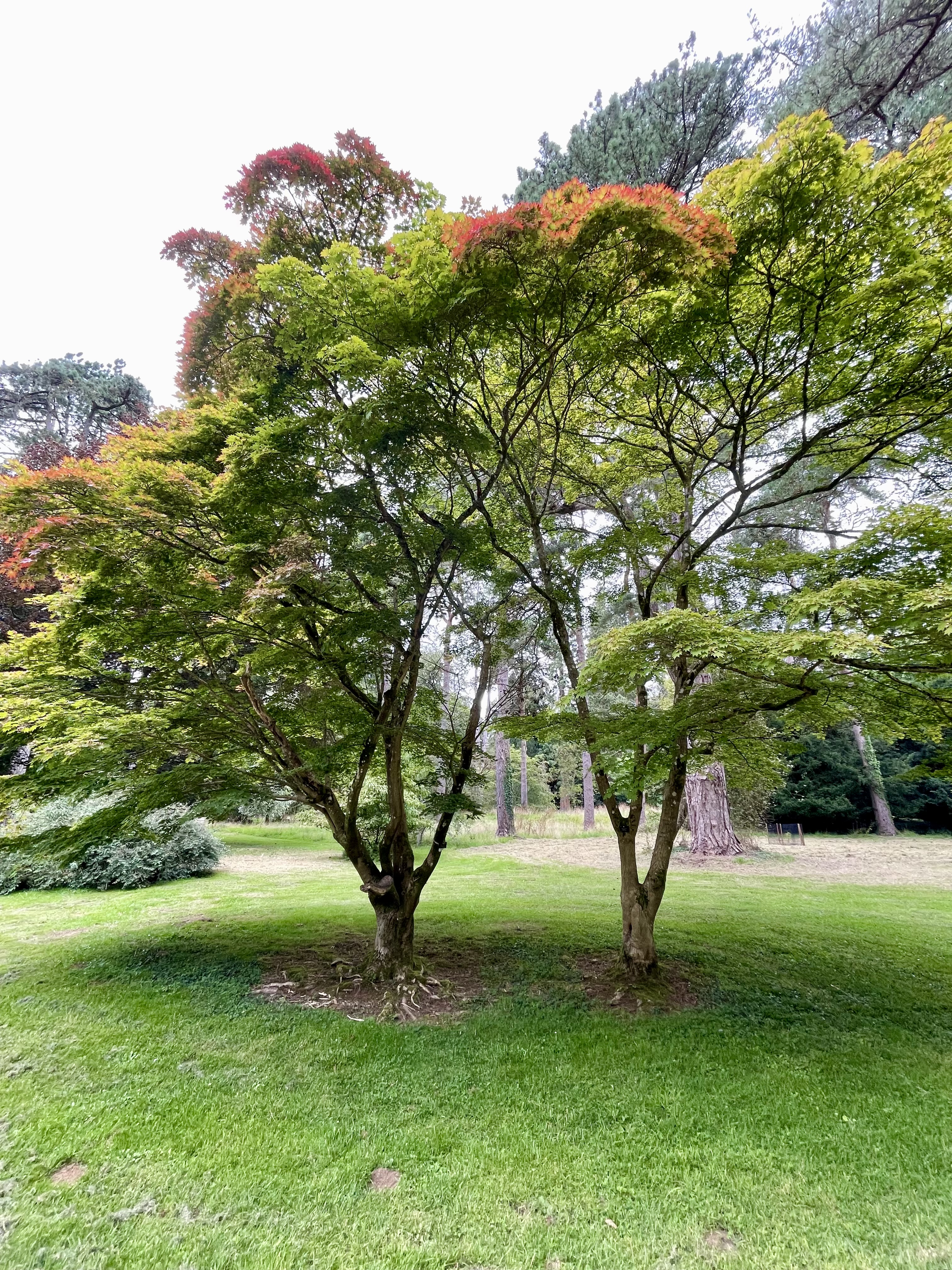
    Another trip to Westonbirt Arboretum, another incredibly valuable lesson in the development of the Outcomes Tree. I was so enthused, I took a picture. Check out this beautiful Acer tree:

    Look at the gorgeous canopy, the perfection of the Japanese Maple leaves – extraordinarily satisfying, yes? Such perfection in nature! Look down the branches – layers of growth and life. Then to the trunk…hang on…there’s two trunks! Two trees! Living in perfect harmony with each other. Check those leaves again – oh yes, the ones on the right are slightly more mature, a reddening in the pigment compared to the ones on the left. Two lives, combined as one.

    Multiple Trees at Work

    In a recent Outcomes Tree workshop, someone asked me how it works if there are multiple trees in an organisation. This picture is, I think, a healthy metaphor for answering that question.

    Very often in organisations, there’s a lot of land-grabbing, empire-building, whatever you want to call it – it’s the equivalent of fighting for the sun at the expense of everything else around. It’s a desperate and limiting pursuit of power at the expense of others. It actually reduces the overall impact of the organisation, demoralises some and promotes others. What the Acers teach us is that, when we are working together, there’s space for both of us. See how each tree makes space for the other; how they flourish in their respective space and limit their overlap; and ultimately, how they appear united as one single canopy.

    When using multiple Outcomes Trees in an organisation, we need to look to see if the overall canopy makes sense.

    Do some outcomes cede way for others so there’s an overall, natural coherence beyond the individual pursuit?

    Where there’s space for our specialism, can we thrive and grow? Where there’s overlap, can we combine or cede growth for the benefit of the overall?

    I understand ceding looks like giving up something or giving it away but, you can see here, it’s natural for the benefit of the overall. There is room for all of us. There is abundance if we embrace it. Internal politics and aggression will be to any organisations detriment, not growth, and land-grabbing doesn’t help. Coherent, generous growth with an abundance mindset will endure.

    Mature leaves=mature leaders

    And what about the more mature leaves? What can they teach us? I believe they show us that in a healthy organisation, there are some experiments more advanced in their learning than others, and we can follow their lead; I also believe it shows us that the more mature people are in an organisation, the more willing they are to ‘go first’ and forge a bold, new set of outcomes for the future. The reddened leaves are going first to provide their energy back to the tree – and our leaders can do the same for our organisations.

    Dare you cede something for the benefit of the canopy?

    The impression from the outside of any organisation should be one, coherent experience (or canopy), even if, internally, it means we cede growth to others for the overall benefit of the customer or user experience.

    Does your canopy of work make sense? Is there too much overlap? Can you cede control over some things to promote growth overall?

    Watch the FREE Green Shoots introduction to the Outcomes Tree to get started growing your own!

  • Why we must reclaim the human face of meetings

    Why we must reclaim the human face of meetings

    Do you know how big your ‘self-view’ video is on Zoom when someone else is sharing content? It’s pretty small, right? In fact, on my 27” monitor, when Zoom is fullscreen and someone is sharing content, every person’s video is about 1.5” x 1” (4cm x 2.5cm).

    Do you know how big the content is? On my monitor, it’s 16” x 10”. That means that you could fit about 100 people’s videos into the size of the content. Are we really saying that when someone is presenting, everyone else’s input is only worth about 1/100th of the value? No wonder people don’t bother contributing or turning their video on; the app is telling them they are not as valuable or worthy as whatever is being shared.

    This was thrown into sharp focus for me recently when I prepared for, and then delivered, an in-person workshop. The team and I spent lots of time crafting and refining slides in preparation for the event to drive the agenda and content. But when we started working together in person at the event, the slides faded into insignificance compared to the actual conversations that took place, and the space I was sharing with other human beings. Suddenly, the slide content was a mere backdrop, not a foreground, and the interactions and individuals took centre-stage. The engagement from participants was absolute, the interactions were insightful and fun, and the outcomes were undoubtedly better.

    When we are in person, the people are the most important thing.

    My personal and professional purpose is to liberate the greatness in others. I believe that humans are inherently brilliant, and if we can only find ways to help each other to switch off their censors and unleash their genius, we’ll all fly. And here was an event where, what I’d prepped, may have been in the way of liberating greatness. This event was a humbling reminder of what I instinctively knew anyway; that when we are in person, the people are the most important thing.

    There’s a building consensus that online, or e-learning, wasn’t successful for children during the pandemic. Whilst schools are all back in classrooms now, we haven’t yet applied some of this understanding to the corporate world. I’m certainly not advocating for getting everyone back into offices – in fact, I think most of the time, most of the work we do can be done from anywhere. When we are expecting to learn, collaborate, and workshop ideas through however, then prioritising the human attendees’ experience must be the best way.

    I make a distinction between just being ‘in-person’ and prioritising attendees, because I think we can do so much more through our current media of choice (Zoom or MS Teams or a.n.other) to recognise that we’re sharing the time and space together as ingenuous, brave, collaborative, thought-provoking human beings.

    I’ve been on two, online, two-day short courses recently. One course used only three slides, temporarily, over the entire duration of the course and it changed my life for the better. One had nearly 400 slides onscreen the whole time over two days and made me wish I’d made better life choices.

    I don’t believe this is all our fault. My hypothesis is that attendees on calls are acting in alignment with what the apps are telling them – that they not as valuable as the ‘content’ being shared. And, with this self-fulfilling prophecy, engagement declines, thinking stops, cameras go off, mics go on mute, and we’re reduced to a quiet box in the corner, overshadowed by what, visually, we’re being told is important – i.e., not us.

    We must reclaim the human face of meetingsespecially when we’re online. We must endeavour to think about the experiences of the attendees, show them their contribution matters, and value their input and creativity as human beings. I, for one, will hack-and-slash the number of slides I ever choose to use again on screen and stop sharing them as soon as I can, if it’s required at all. I encourage you to do the same. If we don’t, we risk losing the insights and inputs from the attendees that can sustain and save our organisations from irrelevance.

  • True simplicity…

    True simplicity is derived from so much more than just the absence of clutter and ornamentation. It’s about bringing order to complexity

    Jony Ive

  • Is this the best design of the 21st Century so far?

    Is this the best design of the 21st Century so far?

    I’m a massive Apple fan and therefore a massive fan of legendary British designer, Sir Jonathan Ive .

    There are so many pictures of Jony Ive, this one makes me laugh…but he is good

    One of my favourite quotes from him is:

    “We try to develop products that seem somehow inevitable. That leave you with the sense that that’s the only possible solution that makes sense,” he explains. “Our products are tools and we don’t want design to get in the way. We’re trying to bring simplicity and clarity, we’re trying to order the products.

    “I think subconsciously people are remarkably discerning. I think that they can sense care.”

    Great design is design where the user instinctively knows what to do with it. It is, in Jony Ive’s words, inevitable. All design leads the user to action – whether that be to sit on a beautifully crafted chair, hit a nail with a solid hammer or move something with wheels. But how often do you, as the user, feel forgotten about? Like the product you’re using is one of millions, made impersonally, isn’t easy to use, uncomfortable, cheap, or you just have no idea what on earth you’re supposed to do as a result of this piece of design. Nasty. Poorly designed.

    (more…)

  • A nine (and a half) step strategic process

    Last time out was my seven starter points for strategic thinking and today I’m going to talk through the nine (and a half) step strategic process I’ve been following in my new role.

    Step 1 – Know yourself

    Sounds obvious, right? But this is where you’ve got to start. This isn’t about just knowing ‘I’m Sam and I’m an [fill in the blank]’. Knowing yourself is fundamental stuff – WHY do you do what you’re setting out to do with this strategy. Not just the stuff at the end of it (like selling stuff, engaging people, turning a profit) but what’s a the core. You might like to go back to the starter points to determine what you’re about.

    When you know what you stand for, you’ll be able to determine your vision and mission. Vision and mission differ – to have both, I think, is relatively important. Your vision is virtually unobtainable – it’s the utopia you are striving for. Your mission is focused on the length of the strategy (i.e. what do you see will happen in 3-5 years from now?).

    Your vision and mission will lead to loads of questions about ‘how will we know’? This is also where you need to establish some goals and targets.

    (more…)

  • Where there’s the will, there IS a way

    I believe that human beings have an extraordinary capacity to achieve incredible things. I think it’s mostly a question of will.

    EXPERIENCE

    There have been a few times through my working life where I’ve really gone for it. Given the space, time and inclination to work hard on a piece of work can produce some pretty big results or pieces of work relatively quickly. The kind of stuff that people say “wow, this must have taken over your life” has actually only taken me four days. Four friggin hard days. Four mentally exhausting days. Four days where I don’t do anything but the work at hand (no emails, calls, procrastinating). But no, it hasn’t taken over my life. Am I overdoing it or is there nothing that can’t be solved in a week (except perhaps building Rome)?

    A BIT SCARY

    To be honest, I sometimes find it a bit scary. Not scary like – “I’m going mad” or “what if I’ve spent four days producing crap”, but scary at the huge capacity of people. What if a person gave it their all ALL OF THE TIME? Think how much could be achieved. Think how good you could get at something.

    (more…)