Tag: team

  • Why we must reclaim the human face of meetings

    Why we must reclaim the human face of meetings

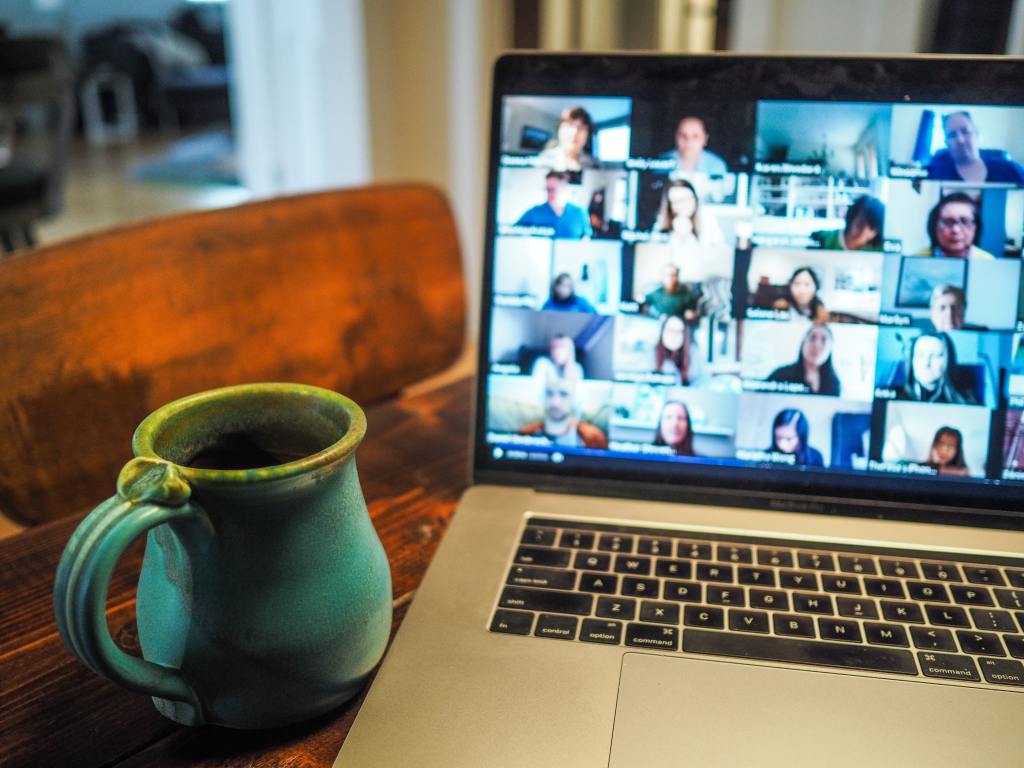
    Do you know how big your ‘self-view’ video is on Zoom when someone else is sharing content? It’s pretty small, right? In fact, on my 27” monitor, when Zoom is fullscreen and someone is sharing content, every person’s video is about 1.5” x 1” (4cm x 2.5cm).

    Do you know how big the content is? On my monitor, it’s 16” x 10”. That means that you could fit about 100 people’s videos into the size of the content. Are we really saying that when someone is presenting, everyone else’s input is only worth about 1/100th of the value? No wonder people don’t bother contributing or turning their video on; the app is telling them they are not as valuable or worthy as whatever is being shared.

    This was thrown into sharp focus for me recently when I prepared for, and then delivered, an in-person workshop. The team and I spent lots of time crafting and refining slides in preparation for the event to drive the agenda and content. But when we started working together in person at the event, the slides faded into insignificance compared to the actual conversations that took place, and the space I was sharing with other human beings. Suddenly, the slide content was a mere backdrop, not a foreground, and the interactions and individuals took centre-stage. The engagement from participants was absolute, the interactions were insightful and fun, and the outcomes were undoubtedly better.

    When we are in person, the people are the most important thing.

    My personal and professional purpose is to liberate the greatness in others. I believe that humans are inherently brilliant, and if we can only find ways to help each other to switch off their censors and unleash their genius, we’ll all fly. And here was an event where, what I’d prepped, may have been in the way of liberating greatness. This event was a humbling reminder of what I instinctively knew anyway; that when we are in person, the people are the most important thing.

    There’s a building consensus that online, or e-learning, wasn’t successful for children during the pandemic. Whilst schools are all back in classrooms now, we haven’t yet applied some of this understanding to the corporate world. I’m certainly not advocating for getting everyone back into offices – in fact, I think most of the time, most of the work we do can be done from anywhere. When we are expecting to learn, collaborate, and workshop ideas through however, then prioritising the human attendees’ experience must be the best way.

    I make a distinction between just being ‘in-person’ and prioritising attendees, because I think we can do so much more through our current media of choice (Zoom or MS Teams or a.n.other) to recognise that we’re sharing the time and space together as ingenuous, brave, collaborative, thought-provoking human beings.

    I’ve been on two, online, two-day short courses recently. One course used only three slides, temporarily, over the entire duration of the course and it changed my life for the better. One had nearly 400 slides onscreen the whole time over two days and made me wish I’d made better life choices.

    I don’t believe this is all our fault. My hypothesis is that attendees on calls are acting in alignment with what the apps are telling them – that they not as valuable as the ‘content’ being shared. And, with this self-fulfilling prophecy, engagement declines, thinking stops, cameras go off, mics go on mute, and we’re reduced to a quiet box in the corner, overshadowed by what, visually, we’re being told is important – i.e., not us.

    We must reclaim the human face of meetingsespecially when we’re online. We must endeavour to think about the experiences of the attendees, show them their contribution matters, and value their input and creativity as human beings. I, for one, will hack-and-slash the number of slides I ever choose to use again on screen and stop sharing them as soon as I can, if it’s required at all. I encourage you to do the same. If we don’t, we risk losing the insights and inputs from the attendees that can sustain and save our organisations from irrelevance.


  • The most stunning leadership statement I heard this year 

    The most stunning leadership statement I heard this year 

    Leadership is hard. In any organisation, at any level, being a leader requires clarity, calm and consideration. It requires people to paint such a compelling picture of a possible future that it seems like it could be a reality today. So much of the role of leaders is based on how they speak – and whether those words match their actions.

    I was wowed when I heard this statement from a leader’s opening remarks earlier this year. Rodrigo leads part of a large multi-national financial services provider. His words and actions impact work that serves millions of customers. He leads quarterly planning events that have thousands of attendees, and during his opening address, he said something that will stay with me forever:

    Your children know my name and I’ll have never met them. Your team members’ children know your name. What do you want them to say about you?”

    This was such an ingeniously human way of describing the impact leaders have, not just in the workplace, but in our lives more broadly. He knew that, whilst he won’t ever meet many of his team members’ children, they have probably heard his name at home. And he wants his people to talk about him positively to their children. By extension, he was making an extraordinary invitation to consider the impact his leaders have on their respective team members.  

    We can all think of leaders and managers we have talked about with disdain at home – to loved ones, friends, family (and children pick up on everything!). Those people close to us will have formed views and opinions of that leader and, potentially, by extension, that organisation. And because these people love us and want what’s best for us, their views will be strong-held based on what they hear. So, this wonderful statement was to ask us to consider how we’d like to be talked about when we’re not there. Do we want to be the leader that people are stressed and upset about and worry about interacting with, keeping people awake on a Sunday night; or do we want to be the leader that enthuses people to speak well about our organisation at home, to look forward to working with them, to bringing their best selves to work with us?

    As my coaching supervisor says to me, ‘how we do anything is how we do everything’and here’s a perfect example of how this can play out: our lives are complex webs of social interactions where each part of the system has an impact on the other.

    What kind of impact do you want to have on others?

  • What Can Yahoo! Teach Us About Presentee-ism?

    There has been a very positive shift in working culture over the past few years that has encouraged employees to work from home more often – living the flexible working mantra, and understanding that being in a physical office (or not) does not necessarily mean that you are at work (or not!). I take advantage of this enlightened approach and work from home often: the technology allows me to access everything exactly the same as in the physical office, and I am judged not on my attendance in the office, but what I achieve in my role. Great…I thought.


    I was a big fan of this approach. Recently, however, I’ve started to consider (or notice) if presenteeism (being at the office all the time) can in fact lead to better results. And the thing that made me consider this is Yahoo!

    (more…)

  • The Seven Deadly Sins of Email: the abuses of electronic mail

    Imagine the scenario: it’s the 1960s and you’re a busy office worker. You’ve just finished up for your two-week summer holiday at Great Yarmouth, and you’re looking forward to riding the snails at the Pleasure Beach. When you return to work, you find over 200 memos in your intray.

    It wouldn’t happen…

    Jump forward to today…you return from your ten-day holiday on some Greek island to 200+ emails (or you might have even spent Sunday night going through them).

    How has this become acceptable?! How has email gone from a pretty geniune form of electronic correspondence to a catch-all pile of every type of information possible? And is it acceptable any more? I call on you all to repent for the seven deadly sins of email and live a virtuous, marvellous new world of email correspondance and make the best use of the other brilliant tools at our disposal for the other tasks that email has become.

    Here are, what I have deemed, the seven deadly sins of email (and what you can do about them):

    (more…)

  • PIES at your meeting

    PIES. Yum. Who doesn’t like pie?

    Pie
    Pie

    But on this occasion, I’m not talking about a tasty pastry and meat/fruit filling, oh no. I’m talking about a method of co-operative learning developed by Dr Spencer Kagan and that I learned whilst I was teaching. I recently thought that this model might be really useful to apply to modern, grown up meetings too. It works like this:

    (more…)

  • Here’s a great aspiration for your team

    You know you’ve got a good team when…

    I’m sure there are hundreds of responses to this prompt. One that really sticks in my mind was from one team session I was working on. We were discussing our hopes and aspirations for the team and I was asking them what would you see and what would you hear (by the way, this phrase is brilliant for exploring notional ideas like respect, trust, teamwork).

    The response that stuck with me is

    “we will hear stupid questions”

    What a fantastic aspiration! A team that gets on well enough and is open enough not to worry about what other people will think if they ask a stupid question; where the stupid question is welcome.

    Ask a stupid question
    Ask a stupid question

    Hurrah for stupid questions. In fact, is the stupidest question the one you don’t ask?!

    How do you know when you’ve got a good team?

  • The joker and the Devil’s advocate…introducing creativity and challenge to meetings

    A while ago, I did some work with my team thinking about what makes a team great, what kind of things we would see and hear and start to prioritise which aspects we wanted to work most on. We chose two things in particular:

    1. Creativity and innovation
    2. Constructively and safely challenge in meetings

    I went away and had a think about some ideas that might help facilitate these aspects during meetings. I came up with an idea I’m going to share here…

      (more…)